
תגית: archaeology
-
oldest known culturally transmitted ritual in the world
Archaeological discoveries at Cloggs Cave in southeastern Australia have uncovered evidence of an ethnographically documented Australian Aboriginal ritual, which appears to have taken place over the last 12,000 years across 500 generations. This is the earliest recorded living ritual. The findings include miniature fireplaces and oil-smeared sticks, dated to the last ice age. There is…
-
Uncovering Europe’s Longest Prehistoric Burial Mound: Insights into the Funnel-Beaker Culture
Archaeologists in the Hradec Králové area in East Bohemia, Czechia, have discovered what appears to be the longest prehistoric burial mound in Europe. This mound, located along the D35 Plotiště-Sadová highway, stretches approximately 190 meters in length and reaches a maximum width of about 15 meters. The findings are dated to the Chalcolithic period and…
-
A new study challenges the idea that Rapa Nui islanders caused an ‘ecocide’
Easter Island, also known as Rapa Nui, is one of the most fascinating and mysterious archaeological sites in the world. For decades, a theory has suggested that the island's ancient inhabitants caused an ecological disaster that led to the collapse of their society. Jared Diamond wrote in his book "Collapse" that the islanders caused their…
-
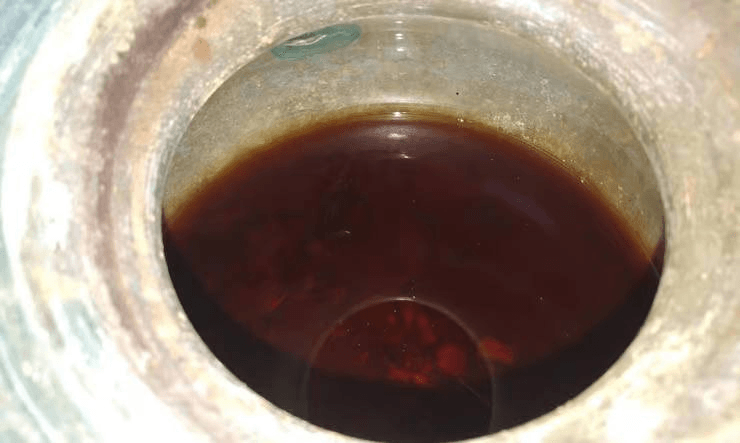
Oldest liquid wine found in Spain
In Carmona, Andalusia, Spain, a team of researchers from the University of Córdoba, led by Professor José Rafael Ruiz Arrebola, discovered a glass urn containing a reddish liquid, identified as the oldest liquid wine ever found, dating back about 2,000 years. This "breaks" the previous record, when liquid wine was discovered that was "only" 1,500…
-
New Study Challenges Human Transport Theory of Stonehenge Bluestones with Glacial Evidence
A new study claims that the bluestones at Stonehenge were not transported to the site by humans but are instead the result of natural glacial movement. The research is based on an analysis of the Newall Boulder, a bluestone discovered at the Stonehenge site in 1924. Until now, the overwhelming majority of archaeologists believed that…
-
Ancient Minoan Circular Structure Discovered in Crete: A Unique Ritual Site
A 4,000-year-old maze-like circular structure was found on a hilltop in western Crete. It immediately brings to mind the famous labyrinth, but its exact nature is unclear, although it is evidently from the Minoan period. The structure was used for ritual purposes, as indicated by numerous animal bones suggesting community feasts involving food, wine, and…
-
The color of the tefillin wasn't an issue
The Talmud states that tefillin must be square and black, and this commandment is considered a law given to Moses at Sinai (i.e no reason but still a law). However, new research (published today at PLOS One) proves that the tefillin found at Qumran were not dyed at all, and certainly not black. Although some…
-
Seahenge as a fertility rite
Seahenge is a prehistoric monument originally built around 2049 BC during the Early Bronze Age in Britain. It is located at Holme-next-the-Sea in Norfolk, England. The monument consists of a circle of oak trunks surrounding an inverted tree stump. The timbers were originally located on a salt marsh, but due to coastal erosion, they were…
-
The Two Tales of Horse Domestication
A new study in "Nature" suggests that horses were domesticated twice. The first attempt failed, and only the second attempt, 1000 years later (around 2200 BCE), succeeded. More precisely, there were two lineages of domesticated horses, but only the later lineage, the one that exists today, dominated the world. The "original" lineage, called Botai horses…
-
More plants (than meat) on the menu of ancient hunter-gatherers
Analysis of isotope residues of zinc and strontium on the enamel of the teeth of pre-historical humans in Morocco from 15,000 years ago, suggests that they were much more vegetarian than carnivores, contrary to what we tend to think about pre-agricultural societies. A significant part of their diet, it turns out, included Mediterranean plant species,…