
תגית: archaeology
-
Water cult in the Andes
Archaeologists have uncovered the skeletal remains of four people (two children, a teenager, and an adult) who were buried in the Viru Valley of Peru about 3,800 years ago, millennia before the Incas flourished in the region. The skeletons were positioned lying on their sides and appear to be facing a mountain. Remains of funerary…
-
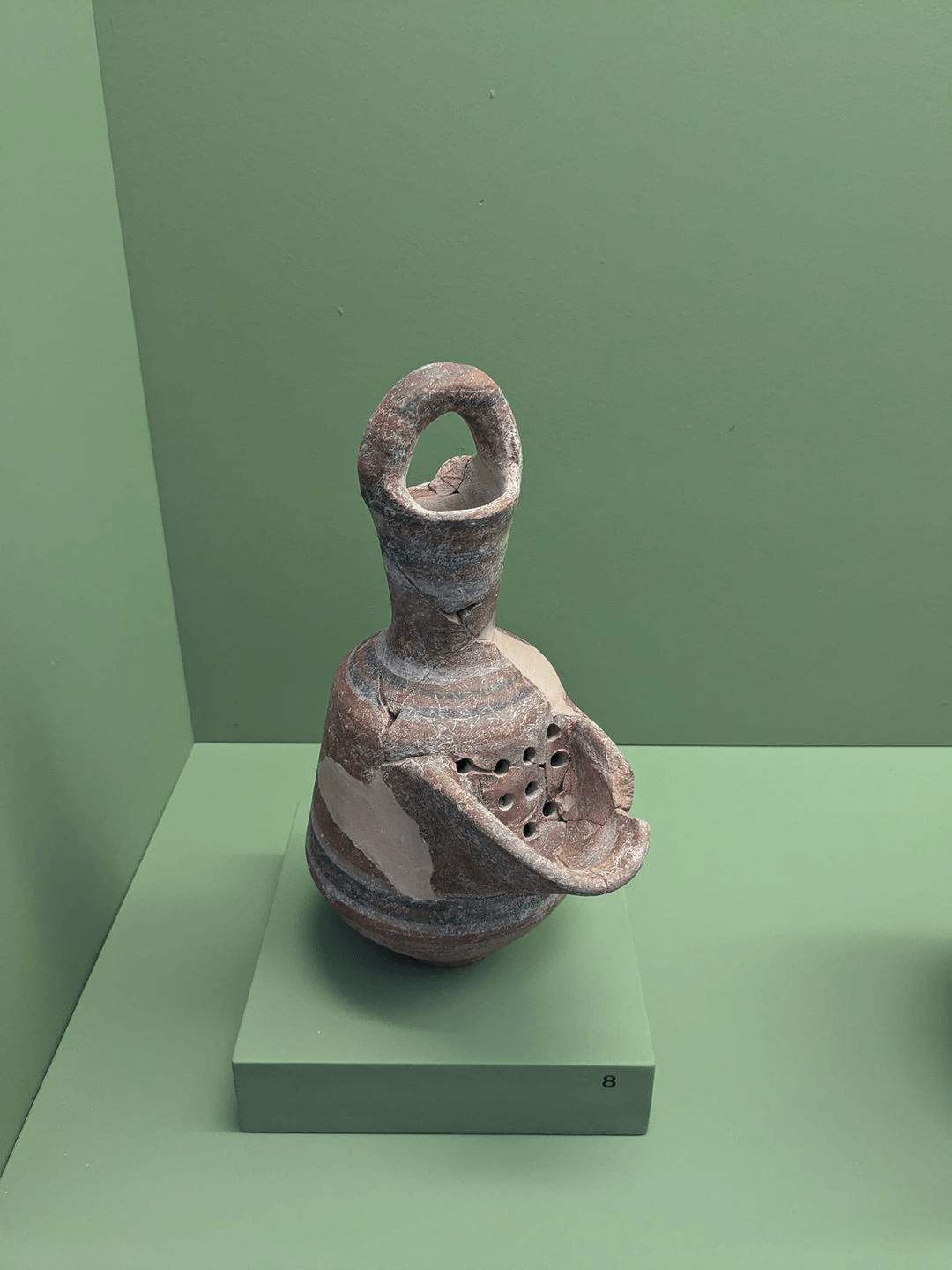
A Philistine beer jug
A Philistine beer jug, Khirbet Qeiyafa. The Iron age 2a, 10th century BC. On display at the Museum of the Biblical Lands, Jerusalem, from the collection of the Israel Antiquities Authority. Most of the vessels found in Khirbet Qeiyafa maintain the Canaanite tradition. The very small number of Philistine-type vessels recovered from the city which…
-
Caves as Doors of Perception #2
Once again, Professor Ran Barkai presents, this time with a more concise and comprehensive lecture, where he expands slightly on the logic behind his theory: According to the worldview of indigenous cultures, caves were considered liminal spaces, gateways to the underworld, from which abundance flows. In these cultures, shamans could enter altered states of consciousness…
-
Caves as Doors of Perception
Professor Ran Barkai from Tel Aviv University researches the connection between humans and caves in terms of altered states of consciousness. Barkai argues that in the distant past, caves served as "transformative arenas" where humans experienced unique states of consciousness, caused by oxygen deprivation due to the use of artificial light deep within the caves.…
-
A Scottish provenance for the Altar Stone of Stonehenge
A new study suggests that the Altar Stone at Stonehenge contains a rock formation found in northern Scotland (called the "Orcadian Basin"), rather than in Wales as previously believed. This means that instead of a 220 km journey, it traveled over 750 km to reach its location. While some of the bluestones did indeed come…
-
Newly found 12,000-year-old burial may belong to a female ‘shaman’
In Çemka Höyük, located in southeastern Turkey near the Tigris River, a 12,000-year-old burial site of a 25-year-old woman was discovered. The grave was covered with a stone slab, and along with her were found remains of animals, including the skull of an aurochs, leg of a marten and a partridge wing. These findings suggest…
-
Homo naledi theory refuted
Last year, a research team led by Lee Berger made a surprising claim: Homo naledi, an ancient species of humans with a brain size one-third that of modern humans, engaged in intentional burial practices and created symbolic markings in the Rising Star cave system in South Africa. This claim, which gained widespread attention through articles…
-
Juukan gorge finding confirming 47,000 direct link
A rock shelter is the archaeological term for a natural cave formed by the karst dissolution of rocks by water. These caves serve as protected spaces with easy access and were used by prehistoric humans both for habitation and as centers for ritual activities. In Western Australia, there are many iron ore deposits, most of…
-
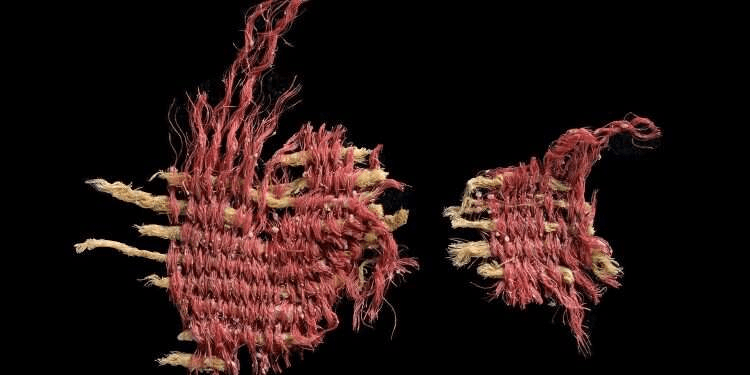
3,800-year-old fabric piece, found in caves in the Judean Desert, was colored using dye from oak scale insects, which researchers believe to be the "scarlet worm" mentioned in biblical texts.
A fabric discovered in a cave in the Judean Desert was dyed purple using dye derived from the kermes insect, which researchers identify with the biblical "scarlet worm". In the new study, published in the Journal of Archaeological Science: Reports, researchers from the Israel Antiquities Authority, Bar-Ilan University, and the Hebrew University participated. According to…