
-
Mircea Eliade's thesis on "The eternal return" and the mother deity
The status of Mircea Eliade's thesis in religious studies is very solid. "The eternal return" and the mother deity. Almost at the level of an axiom.
According to Eliade, up to the beginning of the agricultural period there was only one goddess, who was mother earth and related to the moon. The trees and plants in general were its extensions, that is, the visible part of that whose hidden part is sucked from the earth itself. Due to the fact that people who are buried back in the ground after dying supposedly enter the womb, and a tree grows on their grave, there were also sacred trees that were dedicated to certain people who were supposedly deified. People were also sheltered in the shade of trees for this reason. The male gods came later, when urbanization began, and the age of wars began. It is about 3000 BC. Some of the powers of the mother goddess split and passed to males. The claim is that patriarchy came following the European invasion of India.
The moon fills in and waning out cyclically and is therefore linked to time and renewal. Existence is seen as cycles of death and rebirth. Earth is also seen in its essence as death and renewal, Everything comes from the earth and returns to the earth. In Egyptian mythology we see the connection between Isis and the moon and between Isis and the sycamore tree. In Greek mythology there is a connection between Artemis, who is not a fertility goddess, with the cypress tree and between Artemis and the moon, and between both of them and the doe (a female deer/stag). Also in Norse mythology the stag is connected to the moon and fertility. In some of the stories, Artemis is also associated with the oak tree, so there is also a connection like in Hebrew between elk/oak/god (all of them in hebrew are called in variations of "El"/"Ayl"/"Eyal") as strong and robust.
And one more thing about the etymology: Mircea Eliade's theory fits the Torah completely. In the Torah there is a principle "man is like the tree of the field," which states that what man and tree have in common is that they both sow seed and bear fruit, and therefore there is an analogy between them. This already appears in chapter 1 of Genesis. Both man and tree are built according to god's template, and their action is the same as god's: fertilization and even self-fertilization. The myth about God the creator of the world speaks of how creation was made through self-fertilization.
In general, there is an etymological connection between the word "tree" (Ets) and the verb "make" (Asa), so that both have an element of forceful action. With the action "make" God created the world and the trees symbolize his power. God is also called by the name of his actions, that is why he is called "El", having power, having action. And the tree is called Ilan because it is sturdy and powerful (as said, from the root of A.I.L). This is also true in Indo-European languages. There is a connection between the word "tree" and "to make" and "God". They all have the element don or dor (deity/dendro/do).
-
cannabis was used in Milan in the 17th century
Toxicological analyzes of archaeological human remains reveal findings of Delta-9-THC and CBD in bone samples from the 17th century and suggest that cannabis was used in Milan in the 17th century. Is it for medical purposes? Is it for recreational purposes? (not at all sure not)
-
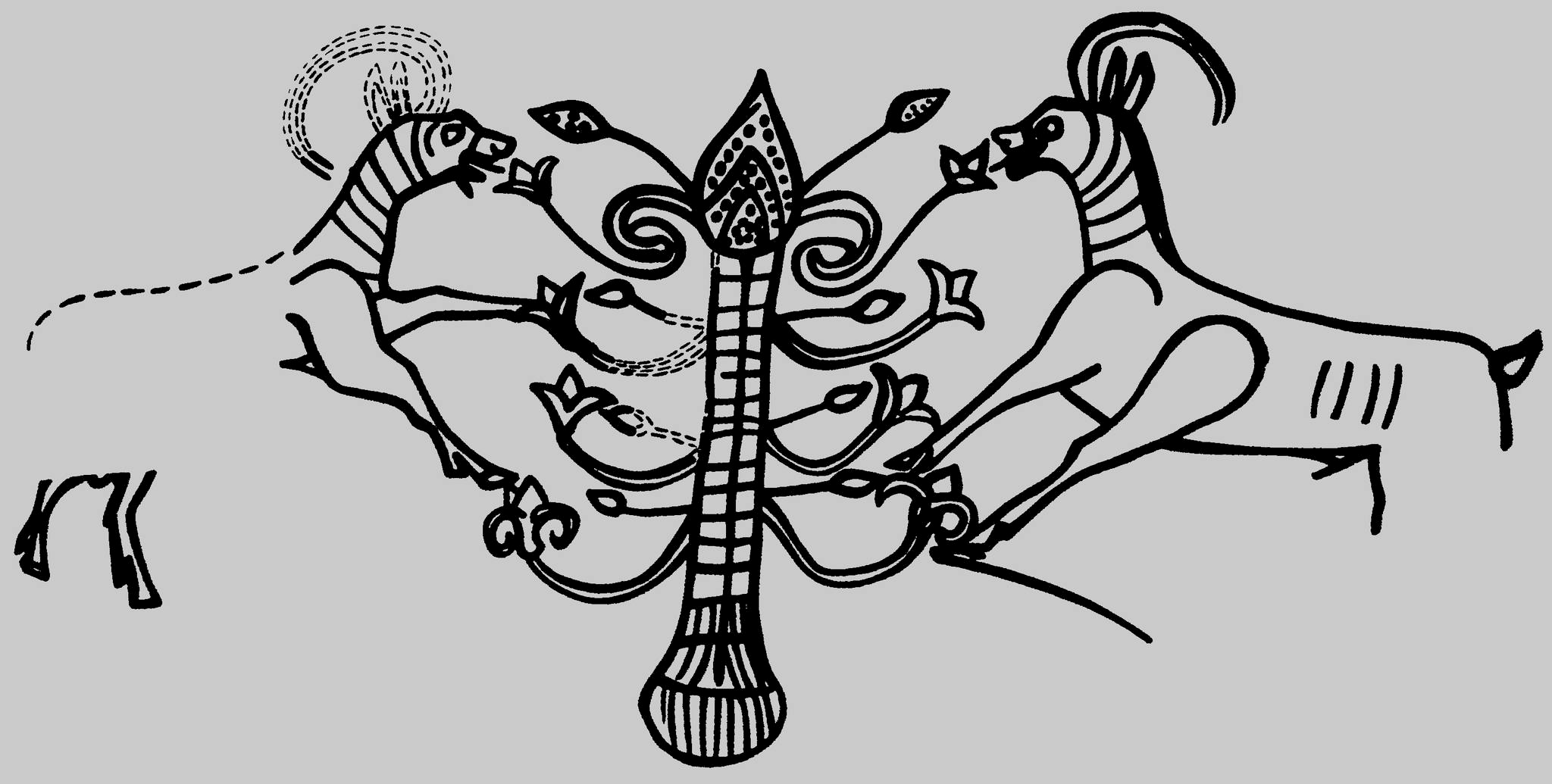
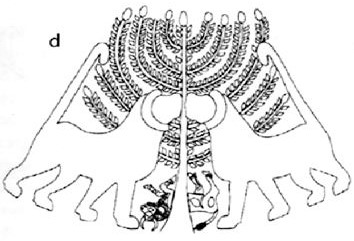
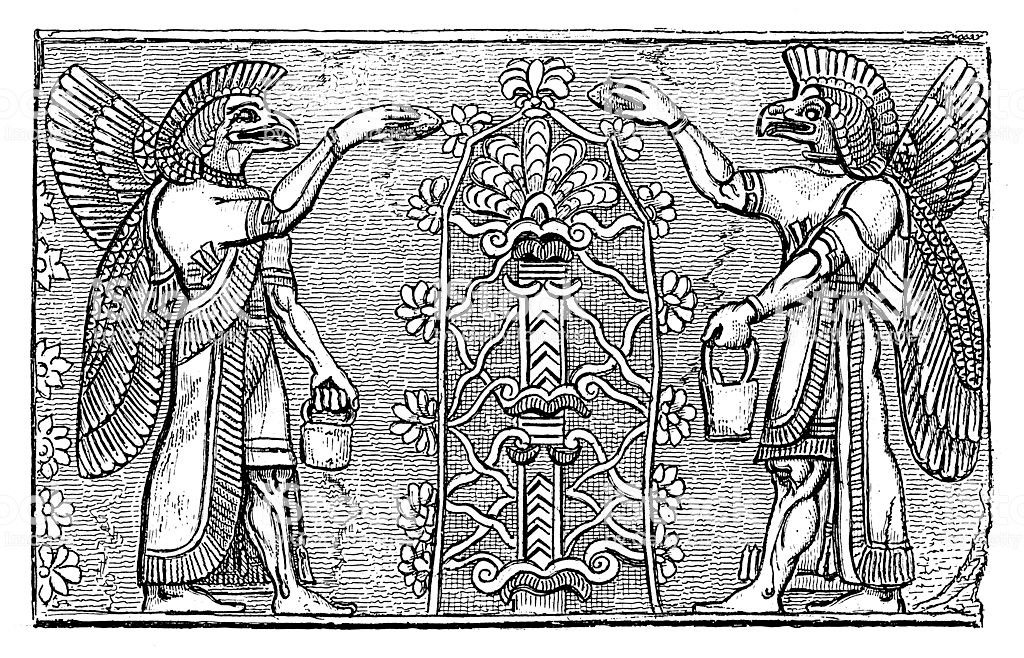
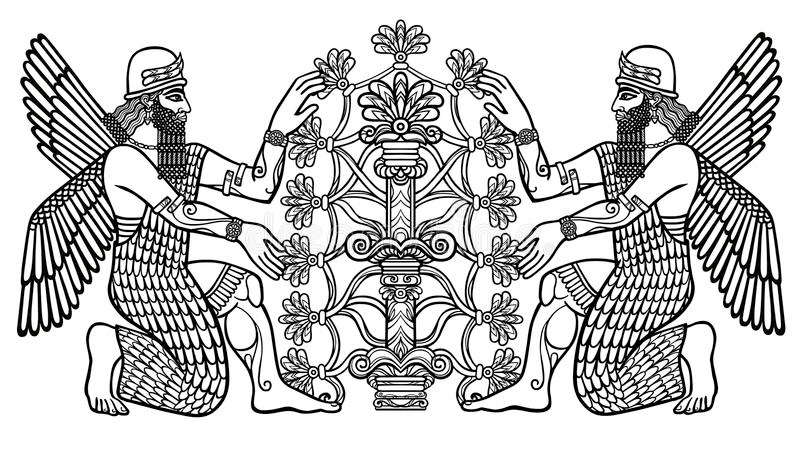
the idea according to which a sacred tree with winged figures next to it is not at all original and exclusive to the Israelite culture
Nitzan Hamburg writes: One of the subjects that fascinates me the most is the goddess Asherah – the goddess of fertility, mother earth, the tree of life – in the ancient world, and her reflections in the Jewish tradition.
Sacred trees were a common cult in antiquity. The trees, which live for hundreds of years, symbolized eternity and were a place of pilgrimage to perform "ritual sex" ceremonies for the needs of fertility and reproduction.
The goddess who stood behind those trees was the same Asherah. Another goddess, Ashtoreth, also represented sexuality and femininity. Thousands of figurines of the fertility deity have been found in archaeological sites in Israel and Judea.
At some point in history, these two deities – Asherah and Ashtoreth – were probably merged into one female deity. Their names are also similar in sound and they were known throughout the ancient Middle East in different versions: Ishtar (for her name Esther is called) or Afrodet or Astarte for Ashtoreth in Greece (Aphrodite).
—
In the Bible we have a tree of life – in heaven. But we also have another sacred tree – the burning bush and the menorah. The menorah, as well as the cherubim, is part of the sacred arrangement of the Ark of the Covenant, but it is much more important in relation to the cherubim.
The menorah itself is described as consisting of vegetation and its shape as a branchy and branched tree, and it also incorporates fire (candles) within it. There is a great similarity between the burning bush and the menorah, since both represent divine supernaturalism – fire and vegetation together, which do not harm each other.
To remind you, at the burning bush Moses meets God "face to face". The connection between the bush, which is identified with God himself, and the menorah appears in the verse: "This is how the lampstand was made: It was made of hammered gold—from its base to its blossoms. The lampstand was made exactly like the sight Yahweh had shown Moses." (Numbers, 8:4).
But what is the "sight that Yahweh showed Moses", according to which the menorah must be built? The same sight of the burning bush: "This great sight: why the bush will not burn" (Exodus, 3:3).
And what is the point of building the menorah? For God to dwell in it: "Have them make me a sanctuary, and I will dwell in them. As I show you the structure of the tabernacle and the structure of all its vessels" (Exodus 25:8-9).
—
It may surprise many, but the seven branched lamp we are familiar with is actually the face of the biblical God himself. Chapter 4 in the book of Zechariah, in the dialogue between Zechariah and an angel, identifies the menorah as the image of God himself.
The angel: "What do you see?"
Zechariah: "I see a solid gold lampstand with a bowl at the top and seven lamps on it, with seven channels to the lamps. 3 Also there are two olive trees by it, one on the right of the bowl and the other on its left. What are these, my lord?"
The angel: "Do you know what these are?"
Zechariah: "No, my lord."
The angel: "… these seven are the eyes of the Lord that wander throughout the land."
Zechariah: "What are these two olive trees on the right of the lampstand and on the left? What are the two olive branches that are in the hands of the two golden pipes that shine gold from above them?"
The angel: "Do you know what these are?"
Zechariah: "No, my lord."
The angel: "These are the two who are anointed to serve the Lord of all the earth"—
After I argued that the menorah represents the face of Yahweh, we can argue to what extent this works out: "And then Hezekiah went to the house of Yahweh, and spread it out before Yahweh. And Hezekiah prayed before Yahweh, and Yahweh said, 'Yahweh, the God of Israel, sits among the cherubim, you are the only god for all the kingdoms of the earth, you made the heavens and the earth'" (2 Kings 19:15).
Yahweh, who is represented as a menorah in the Ark of the Covenant and in the temple, is sitting among the cherubim, that is, the menorah in the center and the cherubim on the sides. In the book of Ezekiel, who lived in Babylon and was familiar with Mesopotamian culture, he describes the sight of the cherubim in the temple, which evokes the memory of Heaven: "While I watched, the cherubim spread their wings and rose from the ground, and as they went, the wheels of the chariots went with them. They stopped at the entrance of the east gate of the LORD’s house, and the glory of the God of Israel was above them" (Ezekiel, 10, 19).
In another passage, he describes the cherubim as having a timorah (a legendary decorated tree) between them: "And he brought me to the temple and measured the rams six cubits wide from here and six cubits wide from there, the width of the tabernacle […] and made of cherubim and timorahs and a timorah between cherub and cherub and the face of a cherub is two. And a man's face is toward the timorah from here, and a lion face toward the timorah from there, made round about the house" (Ezekiel, 41:18-19).
As you can see, the idea according to which a sacred tree (in our case in the form of a menorah) with winged figures next to it is not at all original and exclusive to the Israeli-Jewish culture. Fortunately, we have authentic Mesopotamian images of timorah (probably a palm tree) and cherubim around (winged figures)
-
Firstborn plague as ergot poisoning
You surely know "The Naked Archaeologist", and other pseudo-archaeologists who tried to scientifically prove the possibility of the plagues of Egypt. As mentioned, most of these people are pseudo-scientists of the Graham Hancock genre, but sometimes they are respectable and legitimate scientists. For example, the Americans John Stuart Marr and Curtis Malloy who published in 1996 an article that tried to explain the plagues of Egypt in an epidemiological way (Marr J. S., Malloy C. D. (1996). An epidemiologic analysis of the ten plagues of Egypt. Caduceus 12, 7-24) , and caused a minor scandal, when the publication made waves, an article was made about it in the New York Times and later also a BBC film in 1998 relied on him (in a film from the genre). John S. Marr turns out to have written several famous children's books on health issues and later was behind several fiction thrillers about worldwide epidemics in a genre that received the name bioterrorism and later also became something topical, when the anthrax scare broke out.
For our purposes, their explanation of the tenth plague of firstborns is important – the two claim that the death of the firstborns in Egypt was actually mass ergot poisoning and the reason that only the firstborn died is because the firstborn were the first in everything, especially in food, so that if there was not enough food they were usually the only ones to eat, and therefore when they ate poisoned food they were the first to die too, and the rate of the firstborn dying at a young age in ancient Egypt was higher than the early death of others who were younger. Since they did not know how to explain this death, they attributed it to God. If the two scientists knew Dan Merkur they would probably claim that it is not that they did not know how to explain and therefore attributed it to God, but the opposite, because they knew how to explain it and knew other uses of it that are related to God, attributed the firstborn death to him. Somehow it turns out that a Smithsonian docu-video is going around talking about it. Watch it!
-

The Jewish myth about the origins of medicine
In the Book of Jubilees, chapter 10, the following story is told, according to which the poisons are impure spirits designed to lead humans astray, and therefore Noah prayed to God to ban all the spirits, but following the counter-prayer of the devil, God decided to ban only 90% of them. As for the remaining 10%, the angels taught Noah the cures for these poisons, and this book of cures Noah gave to his sons through his son's Shem.
This thing is written in an apocryphal book. However, in Assaf Harofeh's medical book it is mentioned again. There again it was said that the medical knowledge could be given to Noah, and was copied among all the wise physicians of all peoples, until it was forgotten for 630 years. Its knowledge was renewed again after that among the great physicians, and among them "Asaf the Jew" is remembered.
Who is that Assaf the Jew? It turns out that Assaf ben Brachia was one of King Solomon's "ministers". He had four ministers, one from humans, the second from demons, the third from animals and the fourth from birds. Assaf was the minister from among the human beings, and he is the one who compiled the book of medicine from the mouth of King Solomon himself, who is actually the one who rediscovered this medical knowledge after it had been lost.
According to biblical chronology, the book was lost shortly after the Israelites went down to Egypt. It is likely that the knowledge was forgotten with Joseph's death. It should be noted that according to the Pirke De Rabbi Eliezer (chapter 40), as soon as Joseph died, the staff of Adam which was created on Friday's afternoon just before the creation's sabbath disappeared, and was taken by Jethro, who planted it in his garden and no one was able to get him out, something like King Arthur's Excalibur, until Moses succeeded. So maybe there is some connection.
Back to our topic, it turns out that Assaf the Jew's book of medicine was not written by Assaf, any kind of physician, but is attributed to an ancient Jewish sage named Assaf, who actually edited King Solomon's original book of medicine, which is the source of all the world's medicine.
Zohar Amar adds and points out that the name Assaf alludes to the work of collecting medical chapters. The suggestion inspired by Ecclesiastes 12. In the Middle Ages, an anthology or compilation of articles was called a "Asufa", and it is believed that the book of Josippon was called like that because it is itself a compilation of Jewish history. Amar also points out that one of the meanings of the word "Assaf" in the bible is "healing" or "cure", such as in Miriam's leprosy.
And I point out that when Rachel gave birth to Joseph, she called his name as saying "I'll get another son" which is literally "Yossef". Although the classical biblical exegesis did not know how to deal with this, it is easy to understand that all she is trying to say is "I finally got a son". "Yossef" is the word "at the end" or "finally", and "Acher" ("another") is the word "last" or "after". Verse before that she also says: "God gathered my shame", in the sense of "in the end", or alternatively in the sense of " I was cured."
I will summarize what can be understood so far:
1. Medicine is nothing but herbalism
2. Poison is nothing but a substance with psychoactive properties
3. When it is taken in the wrong dose, it controls those who consume it with "demons"
4. When it is taken in the right dose, it Heals
5. Medicine, more than a healed wound, is a kind of psychoactive serum that penetrates the skin and "heals" the soul
-
When Women Were The Shamans
Unfortunately, I came late and I'm writing here about something that is already its third episode, and yet. Gabriela Gutierrez is an independent researcher specializing in mythology and ancient history. About two months ago, she began giving monthly lectures in a series of lectures on shamanic femininity and its place in religious life in pre-patriarchal Europe. The previous lectures dealt with the Paleolithic period (starting 60,000 years ago) and the Neolithic period, and the upcoming lecture to be held at the beginning of December will deal with the mystery cults in ancient Greece in the pre-Hellenistic period (i.e from the Minoan to the Classical period). £20 entry.
-
use of psychedelic substances as anti-parasitic drugs could enter them to cultural mainstream
Noah Whiteman in chapter 10 of his book "Most Delicious Poison" says that some of the substances used in shamanic rituals around the world such as nicotine, arecoline, THC and CBD, do contain substances that reward the mesolimbic system and are thus psychoactive, but at the same time they mimic neurotransmitters, which act on the neurons in ribbon worms and roundworms. As a result, these toxins can be used as anthelmintics. He cites new research showing that high concentrations of substances such as these in the blood were associated with reduced parasitic worm loads. Higher levels of such substances also made the person less likely to be reinfected the following year. Thus, he concludes, the use of these substances as anti-parasitic drugs could have increased the survival rates of users in parasite-rich environments, and this is what helped alter consciousness enter the cultural mainstream in these places.
Regardless, in the last few days a study from Cornell University was published which claims that the findings confirm the hypothesis that cannabinoids evolved to deter insects, so that in fact the substances containing THC can be used as natural exterminators.
-
Noah Whiteman's "Most Delicious Poison"
Noah Whiteman is Professor of Genetics, Genomics and Evolution and Director of the Essig Museum of Entomology at UC Berkeley. In his new book "Most Delicious Poison: The Story of Nature's Toxins―From Spices to Vices", he focuses on the chemicals that plants, fungi and animals produce to defend themselves from attack, and how this war for existence has ultimately affected the human experience and our consumption patterns.
In general, poisons evolved to allow their source to deal with nature, and so did the resistance to poisons evolve to allow their consumers to deal with poisons. There are poisons whose character of resistance has changed, causing consumers to continue consuming them and consequently causing them to continue to develop in a kind of co-evolution. An example of this is of course man. Many of the plants that produce chemicals that are psychoactive appear to have been originally used as anti-parasitic drugs, but at some point the nature of their use changed after they were discovered as mind alters.
In the book he emphasizes that poison is, after all, a weapon and a defense mechanism, and not anything else designed to do us good or bad. It did not develop because of us nor for us. But it is our human hubris that ultimately caused that in the last 500 years we are in a kind of pursuit of the poison, and in fact the poison is the one that sculpted and outlined history. And he demonstrates it.
-
rewriting assumptions about a gendered division of labor in prehistoric times
The "man the hunter" narrative suggests that prehistoric men hunted and women gathered, leading to the belief that it was hunting that shaped human society and that the structure of human society was the result of evolutionary forces. However, there is growing evidence that women were better suited to endurance activities and participated in hunting activities just as much as men. So the entire gender narrative is culturally biased, a consequence of the agricultural revolution alone. This does not mean that men and women are biologically identical, but only that the reduction of the female role to collecting only because that is supposedly what their bodies allow, is not true. Which means that the myth according to which the gender division existed even in the time of primitive man is incorrect and underestimates what women were capable of, because it turns out that women also had hunting roles – so claim Sarah Lacy and Cara Ocobock, biological anthropologists who specialize in the physiology of humans living in extreme conditions and study the health of the ancient people according to archeology: "Our Paleolithic ancestors lived in a world where everyone in the band pulled their own weight, performing multiple tasks. It was not a utopia, but it was not a patriarchy. Certainly accommodations must have been made for group members who were sick, recovering from childbirth or otherwise temporarily incapacitated. But pregnancy, lactation, child-rearing and menstruation are not permanently disabling events, as researchers found among the living Agta of the Philippines who continue to hunt during these life periods."