
-
PTSD in mesopotamia
Medical texts in cuneiform from the Assyrian period (14th to 7th centuries BCE) refer to war injuries extending beyond physical damage, as well as unintelligible speech, terrifying hallucinations, and wandering thoughts. These can be interpreted today as PTSD —according to Walid Khalid Abdul-Hamid and Jamie Hacker Hughes in a 2014 study published in "Early Science and Medicine."
Men in Mesopotamia served in a three-year rotation and frequently participated in brutal wars. Living conditions in the ancient world were much harsher, as were the frequency, intensity, and standards of warfare. The duration of military service varied over time based on military needs, but considering an average life expectancy of 30 to 40 years, with several rounds of conscription, a person might serve between 15% to 25% of their life in the army. The rest of life, spent with family, was often not secure, so one might experience trauma both as an attacker and as a victim. Living back then meant carrying a heavy traumatic burden.
Trauma could manifest as a bad mood, flashbacks, or nightmares. These were considered to be caused by evil spirits, and combat trauma could be experienced as an attack by the ghosts of soldiers who died in battle, whether comrades or avenging enemies. They were treated spiritually, as divine punishment or demonic revenge.
Treatment was a combination of spiritual and physical approaches. There were two types of healers: asu and asipu. An asu was a doctor who treated symptoms directly, often through trial and error, using medicines and rituals, probably more medicines. An asipu provided more holistic treatment, focusing more on diagnosing illnesses than on symptom management. Treatment often involved ritualistic recitations, offerings, and amulets, along with necessary medical supplements.
-
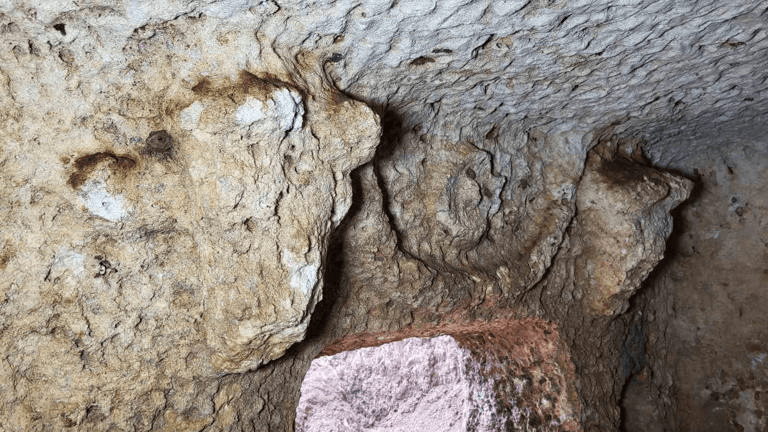
The sacred bull as the essence of the rebirth and immortality
Today it was reported that a 2000-year-old tomb was discovered in the ancient city of Tharsa, located near the village of Kuyulu in southeastern Anatolia. The tomb is part of a larger burial complex containing 60 tombs. Surrounding the tomb are arch decorations and two bull heads. The arch decorations, known as arcosolium, suggest that a significant person was buried there. The bull head decorations, known as bucranium, resemble the logo of the Chicago Bulls – a horned bull’s head. This indicates that the tomb belonged to a distinguished person, possibly even a holy figure. The tradition of decorating tombs with bucranium was adopted in Rome, symbolizing either a temple or a person who served in a temple, at the very least, someone whose tomb was considered a "temple-like", a holy person, or someone with divine gifts, achievements, or exceptional qualities.
To understand why the bull was chosen, one must comprehend the institution of sacrifices and their significance. In ancient Greece, severed bull heads from sacrificial animals were placed on temple walls. However, because organic material decays, smells, and disintegrates, at some point, they preferred to include the severed head in the sacrifice (by eating or burning it) and replace it with marble replicas. The bull symbolized the chief god and his physical power, often representing the thunder and lightning god, associated with rain, fertility, awe, and power. Connection with these gods meant connection with the "operational system of reality", thus necessitating sympathetic magic to communicate with the gods through symbols representing them.
Bulls were emblems of thunder gods who usually wore horned headgear, hence bulls were sacrificed in their honor. This practice was common among thunder gods in the East, particularly in Mesopotamia and the Levant, such as Baal and Hadad, who were identified with the bull. In Egypt, they were associated with the ram; Amun was a ram, but later, when unified with the god Ra, he was also symbolized as a bull. Specifically, Hathor, representing life and fertility, was symbolized by a cow, and Ra, who regulated her, was born from and fertilized her, symbolized by the bull.
The Greek myth of Europa involves Zeus transforming into a bull to abduct her to Crete. Their son Minos, King of Crete, received a miraculous bull to sacrifice from Poseidon. When Minos chose to replace it with a real bull, he was punished as his wife mated with the bull to produce the Minotaur. Minos refused to acknowledge the Minotaur as his son and decided to imprison it in the labyrinth. Athens owed tribute to Minos, and to repay the debt, Minos demanded human sacrifices to the bull. This ambivalence towards the bull likely stems from the custom of human sacrifices to the thunder god for blessings of rain. The Bible condemns this practice, and the Romans also described it about the Carthaginians.
Those sacrificed were not just ordinary people but individuals chosen for their spiritual attributes, considered "holy" with a special connection to the gods, enabling them to intercede on behalf of humans. Death was seen as necessary, but such individuals were viewed as consciously embracing death, considered as "dying while living." The emphasis was on returning from death, with those who died intentionally expected to return to life, either physically, becoming saints, or spiritually.
Regarding spiritual return, there were various perspectives: the Indo-European idea of reincarnation and the Egyptian concept of soul rebirth in the "womb of the goddess", leading to a new birth in the afterlife. Vedic religions also advanced the idea of reincarnation, speaking of liberation from the cycle of life, "samsara". This means reincarnation wasn't necessarily returning to our world in another body but continuing the curse of material existence, like restarting a level in a video game instead of advancing. True rebirth was transcending to the realm of immortality, the same as the Egyptian view of the afterlife. In both Vedic and Egyptian religions, bulls were considered sacred. In Hinduism, the bull symbolized reincarnation, and in Egyptian religion, the cow symbolized rebirth and served as a mediator between humans and gods.
This intentional death is the essence of sacrifice, initiating death and thus rebirth. The sacrificed object is the offering's essence to the gods, hence the bull or other animals symbolizing power. If not a human experiencing intentional death, the god's emblem was sacrificed. Young sacrifices were often preferred to ensure they were blemish-free, with a higher chance of perfection when young.
Sometimes, the emblematic sacrifice was replaced with human sacrifice, but anthropologically, animal sacrifice was preferred over human sacrifice for what we would call moral reasons or "speciesism". Religions have always favored redeeming a person with an animal, and once blood sacrifices became disfavored, they advocated for alternatives. In Judaism, this is referred to as "the offering of our lips", i.e prayer. The sacrificial ritual, the intentional death of a person aiming for rebirth through sacrifice, was replaced with the intentional death of an animal, which then transformed into an intentional death through prayer, meditation, or spiritual experience.
-
why should the Yggdrasil be identified with the yew and not with the ash tree, and the psychedelic and typographic connection!
The Yggdrasil tree is considered the norse "world tree," the axis mundi, or the central pillar of the universe, connecting and separating different realms of existence. Its roots extend to various regions, and its branches reach the heavens. It serves as a bridge between worlds, linking Asgard (the realm of the gods), Midgard (the realm of humans), and Hel (the realm of the dead).
The exact nature of the tree is somewhat ambiguous, but it is clear that the tree is supposed to be evergreen. Evergreen trees symbolize eternal life, continuity, and resilience. Their foliage remains green and vibrant throughout the year, even in harsh conditions like winter, drought, or distress. As a result, they are often associated with immortality, renewal, and the cyclical nature of life. In many cultures and mythologies, evergreens represent the enduring presence of life, connecting the past, present, and future. They serve as symbols of hope, strength, and the eternal cycle of growth and rebirth.
The identity of the tree is generally considered to be an ash tree. In the Eddas, where the tree is described, it is named Askr Yggdrasills, with Askr being the Norse name for the tree. The name "Yggdrasil" is often translated to mean "Ygg's horse." Ygg is one of the Old Norse names for Odin, meaning "the Terrible." Meanwhile, "drasil," although literally meaning "horse," can also be interpreted as "gallows" (derived from the Proto-Indo-European root der, meaning "to support." In other words, a gallows supports someone from above). One of the myths about Yggdrasil is that Odin hung from the tree for nine days and nine nights to understand the secrets of the runes. Thus, the tree is supposed to symbolize wisdom, akin to the biblical Tree of Knowledge. What's unique about such trees and stories about miraculous knowledge is that they are often poisonous; those who seek this knowledge must die and be reborn.
A tree that fits this description is the yew tree, known as Taxus. It is an evergreen conifer with highly toxic bark and seeds. Originally, the poison (called "taxol") is meant to prevent pests and larvae from growing, as the poison inhibits cell growth (and thus, it also serves, incidentally, as a treatment for malignant cancerous tumors). As a result, the tree's growth rate is very slow, likely because it poisoned itself and managed to overcome this poisoning. Due to its slow growth, the yew tree has a very long lifespan, hundreds or even thousands of years. It is also very tall, reaching up to 15 meters. The Celts revered it for this reason, and it is often planted over graves in cemeteries.
Regarding its toxicity, most animals that eat its fruit (which is edible and called "berries") cannot avoid swallowing its seeds. Their stomachs cannot break down the seed's shell containing the poison, and they die. The poison is also found in the leaves, which are eaten by grazing animals. Interestingly, deer can digest it, setting them apart from other livestock. Deer are traditionally seen as capable of eating leaves from trees considered toxic, such as the acacia tree.
Furthermore, it turns out that the tree's bark releases a toxic gas called taxine on particularly hot days. Taxine can cause hallucinations in certain cases, which might be the source of the myth about Odin and the miraculous knowledge, as the tree's poisons can kill. Incidentally, one of the creatures described as living in or near the tree is a dreadful dragon named Nidhogg (Níðhöggr). Dragons, snakes, and generally terrible creatures are often considered guardians of trees in various mythologies. Therefore, it is likely that a poisonous tree would be the world tree. Specifically, Odin's horse is considered an eight-legged horse capable of crossing long distances, another common metaphor for a hallucinogenic experience (credit: Carl Ruck, in his book "Entheogens, Myth & Human Consciousness". From this book, I took the image depicting Odin on his horse).
I will conclude with an anecdote. In one of my previous posts, I mentioned the hieroglyph symbolizing a curved snake and somehow related to hidden knowledge. Well, one of the runes that Odin tried and succeeded in understanding is called yew (and symbolizes this tree). In Old English, ēoh. In Proto-Germanic, īhaz. And in Old Norse, therefore, Eihwaz. Its symbol: like the discussed letter N, a curved snake, ᛇ. Now it is clear why.
-
Lesson in Biblical Rhetoric: evil beasts
Our starting point in this blog is that Judaism, or the religious layer of society that wrote the Bible, was shamanistic in nature, connected to the earth and the environment, and influenced by them in its imagery and associations. Whenever a plant or animal is mentioned, both the storytellers and the listeners knew exactly what was meant and were expected to understand the significance. It is possible that the storytellers intentionally encrypted their messages, and the associative world of their target audience and the masses were somewhat different, resulting in multi-layered imagery that would only be partially understood by those not initiated into the secret. It is also possible that these writings were intended for listeners of a certain period with a specific worldview, and therefore people from a different period or those less connected to nature, the earth, and the environment might struggle to understand the imagery. This is likely how we are. This, in any case, is our assumption.
One of the topics with which Natan Slifkin opens his encyclopedia on animals in the Torah is the role of animals in the Torah: their role as characters in the grand narrative of creation and specifically in narrative or rhetorical contexts. Animals are described as messengers of God, and their primary role is to awaken humans. Whether to inspire, teach a moral lesson, or convey a specific message, God brings humans and animals together for a particular purpose, with each situation and participant having a purpose.
For example, predators are referred to as "evil animals". It is emphasized that these animals do not have malicious intentions, as they do not possess free will to make moral decisions. They are considered evil in the sense that they are aggressive or harmful. The interpretation of their behavior lies with the one making the judgment, the human. Therefore, predators are often presented as God's messengers to implement a desired change, typically a change in the behavior of sinners or a punishment towards them.
In the context of reward and punishment, Israelites enemies are depicted as represented by these predators. The four beasts described in Daniel, for example, are four kingdoms that will enslave the nation of Israel: the lion, the bear, the leopard, and the beast resembling a hog, representing the kingdoms of Babylon, Persia, Greece, and Rome respectively. According to the curses described in the Torah, the role of predators is to punish the Israelites and, through suffering, cleanse their sins and persuade them to repent: "I will send wild animals among you, and they will rob you of your children, destroy your cattle, and make you so few in number that your roads will be deserted" (Leviticus 26:22), or in the prophets: "So I will be like a lion to them, like a leopard I will ambush by the road to Assyria. Like a bear angry of robbing its cubs I will meet and attack them and rip them open of their closed hearts; like a lion I will devour them; a wild animal will tear them apart" (Hosea 13:7-8), or "Son of man, if a country sins against me by being unfaithful and I will send the evil beast to eat them and kill them and i will make it a deserted place without anyone dare to go out because of the fear of the beasts" (Ezekiel 14:13).
In Jewish rhetoric, therefore, descriptions of Israel's enemies as predators whose brutality is inhuman are common. Similarly, descriptions of the people of Israel being slaughtered en masse like sheep led to the slaughter, or like animals failing to escape the claws of the predator tearing them apart, are also common. For example, in Lamentations: "And from the daughter of Zion all her beauty is departed: her princes are become like rams that find no pasture, and they are gone without strength before the pursuer" (Lamentations 1:6). In contrast, in times of peace it is promised, "I will remove wild beasts from the land" (Leviticus 26:6), and in the vision of the end of days it is said that there will be no enmity between Israel and its enemies: "The wolf will live with the lamb, the leopard will lie down with the goat, the calf and the lion and the yearling together… The cow will feed with the bear, their young will lie down together, and the lion will eat straw like the ox" (Isaiah 11:6-7).
I am posting this without making any declarations one way or another. I tried to explain to my interlocutors the background to Gallant's statement at the beginning of the war: "We are fighting human animals". Through the biblical lens, this cannot be understood as dehumanization, but rather as a rhetorical metaphor for beginners learning in the school of public speakers.
%
Natan Slifkin is the founder of the Biblical Museum of Nature in Bet Shemesh, and the one who makes zoology accessible to the Orthodox Jews. For the Orthodox Jews, animals are considered inferior, dirty, and if they are not kosher then also impure, and therefore the attitude towards them is from the beginning an attitude of reluctance. This may cause a disgraceful attitude towards animals, but mainly ignorance when it comes to animals. There is of course the matter of the conflict between religion and science, but it is likely that the main goal was to increase awareness and the attitude of awe towards nature, and not necessarily recognition of the truths of science that contradict traditional Judaism. And although this is probably his goal, he provoked a controversy among ultra-Orthodox society around the question of compatibility between evolution and the traditional story. At the same time, it is evident that Slifkin's writings deal more with ethnozoology than with mere zoology, the attitude of humans and especially the Jews in their writings and in the Midrash towards animals. Slifkin published most of his books in English, except for two that were translated to hebrew. The first book was about the mysterious and mythical creatures in the Midrash. And a few months ago he released the first volume (of the one that currently exists) of the encyclopedia of the animal world in Judaism – originally released in english at 2015.
-
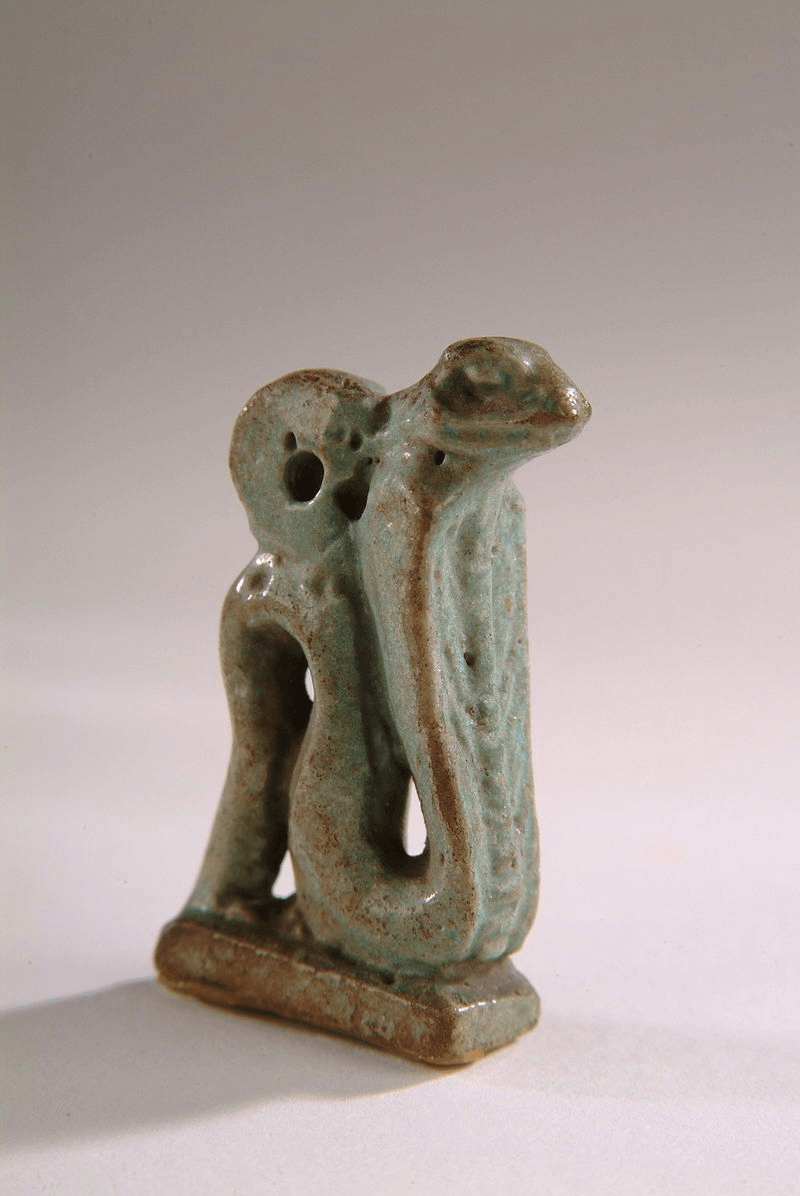
The Symbolism of the Hebrew Word "Nasi" and Its Potential Egyptian Origins
In Hebrew, "president" is "the most exalted of all", according to I Kings 1:5 and also according to the Nachmanides in his interpretation of the verse "You shall not curse God, and you shall not curse a president among your people" (Exodus 22:27). In Proverbs 25:13, it seems that the clouds are also called that because they stand above everyone. It seems that this is a word of Egyptian origin, because this hieroglyph 𓀯 (nsw) means "king". However, when Moses is asked to make the copper snake (in Numbers 2:10), he is asked to "put it on a pole", in hebrew "Nes", means a flag or just something high". What is that "Nes"? A snake standing in a high place reminds us of the Ouraeus (Οὐραῖος), the royal snake placed on the Pharaoh's crown.
We also see the sign of the letter 𐤍 in ancient Hebrew influenced by the shape of the ancient Egyptian hieroglyph for snake. In Egyptian, this hieroglyph is called nʕw (nachu), and in the Proto-Sinai script it is called "snake" naḥš, although as a water snake, so it is later called simply "fish" or "noon", but we see that the bend in the middle of the letter also rolled in the end In Greek (𝜈, where the letter is called "nu") and in Latin N – after this curve the water monster is called "Akalthon" (tortuous serpent) or "Leviathan". By the way, we notice that the difference between Akalthon and Leviathan is in the letters "ak". Well: "akh" in Egyptian, ꜣḫ, or the hieroglyph 𓅜 symbolized the supreme wisdom, the glow of the sun and the Ouraeus on the king's crown, according to the dictionary of Egyptian hieroglyphs by E.A Wallis (1920).
It should be noted that the glow of the sun means the aura of fire around the sun. In Egyptian there are two words to describe this flame: both "nsr" and "ḫt". Regarding "nsr", it is important to note the n and the s, and by the way also to mention that the combination of the two "ns" in Egyptian is "tongue", which comes to symbolize the form in which the snake sticks out its tongue all the time. But the word "ḫt" is more important. According to William Ayers Ward from the American University in Beirut, there is an etymological connection between this word and the word Hỉw and the word Hwy. The word Hỉw describes the animal of Seth, which it turns out was at one time considered a snake. Not because a snake is necessarily an evil animal, but because a snake, like any other animal, makes battle sounds designed to frighten its enemy. These exhalations are what was called in ancient Egyptian, and what in Aramaic they would later call "hwya" (חויא), the word for snake. Any frightening sound or the roar of an animal will be called that, so the snake is named after its frightening voice.
In Akkadian, awātum, another derivation of the egyptian Hwy, means "a word". or "a thing" (or just… logos, λόγος). I am relying on Elad Aharon who at the time opened the Facebook page "Awātum – Akkadian word of the day", the Hebrew equivalent of this concept is "a sign" (hebrew: "ot" or "owt") or as it is written in Genesis 9, "the sign of the covenant", the rainbow. He probably means the sound of thunder that sounds like the roar of an animal. But I will content myself with the fact that "Hawa" expresses a wise opinion, such as "Day after day they pour forth speech; night after night they reveal knowledge" (Psalms 19) or "Therefore I say: Listen to me; I too will tell you what I know" (Job 32). In other words, "Hawa" means "knowledge" or "intelligence" or in fact exactly as we called the Egyptian "Akh", which was symbolized by the same "Nes". And in Greek… Gnosis, γνῶσις.
We do see that the Gnostics worshiped the serpent. And we do see that there was even such a sect called accordingly the "Naasseni" or Ophites. I don't know if it has anything to do with the fact that president is from the hebrew words "Nes" or the snake "Nahash", but the equivalent word for president in the Bible is usually "head" (Rosh), and the same word is the word that usually generically describes poison or venom.
Attached: a picture of a snake in the shape of the letter N.
-
Buddhism as the origin of the western religions?
Sort of related. If one tries to carry out an archeology of ideas, he will probably learn about the theory based on which the "religions of orthopraxy" and the philosophy that fostered an ethic of life "according to nature" and the adoption of righteous virtues, were in fact the Hellenistic version of Buddhism, which the Greeks encountered on Alexander the Great's journey to India. The school of skepticism was founded by Pyrrho of Elis, who participated in Alexander's journey to India and was influenced by what he called "gymnosophists" (γυμνοσοφισταί), meaning naked fakirs. Skepticism influenced Middle Platonism, and its branches: Stoicism and Cynicism. These influenced the Neo-Pythagoreans and they in turn influenced Judaism and Christianity. We see that the Greek word for what can be called dharma, Eusebia (εὐσέβεια), was translated into the New Testament as "piety". The Christian ascetic monks in the deserts, the Tanaim who grieved the destruction of the temple, the Essenes in the Dead Sea, the Judaic "sons of the prophets" – they were all a kind of heaven-fearing fakirs who embraced "the path".
-
A bit about the evolution of cannabis
The origin of cannabis dates back 28 million years. Tectonic plate activity, which caused geological folding as a result of the penetration of the Indian subcontinent into Asia, contributed to the flourishing of cannabis by creating a comfortable habitat for it. Cannabis thrives in open, treeless habitats such as the Tibetan Plateau. From there, it spread eastward and westward. It was domesticated in China 12,000 years ago, but its use as a drug goes back "just" 4,000 years. It is not clear how they were discovered, but probably as a result of starvation. When you are hungry you eat everything.
The earliest clear evidence of people using drug-type cannabis to get high comes from a mountain cemetery in western China about 2,200 years ago. Written evidence from India suggests that people were using drug-type cannabis as early as 2,000 years ago. The use of cannabis spread to Africa in the 13th century and to Latin America in the 16th century.
The psychoactive effects of cannabis are attributed to molecules like THC, which interact with the endocannabinoid system in animals. The endocannabinoid system is a system of regulation and control of signals in various cells in the body, and is found in almost all animals. The system involved in regulating various biological functions such as appetite, sleep, mood, memory, metabolism, and growth. The system uses molecules produced by the body called endocannabinoids, which are similar to those produced by cannabis, and various receptors in the body bind to them. What THC does is essentially mimic these substances and activate these systems.
Compounds such as THC and CBD are called phytocannabinoids, and their function is not entirely clear. They may serve some purpose for the plant, or it may be that in the form of distributing endocannabinoid-like compounds, the plant "punishes" the creature that ate it and causes it to lose control of its body.
Phytocannabinoids have evolved during the evolution of cannabis to protect itself, that's clear, from various pests such as pathogens and herbivores. But who, where, how, and why? Unclear. Based on the antimicrobial and antifungal properties, it can be assumed that these were the pathogens that prevented cannabis from surviving, and based on the psychoactive properties, either a predator that destabilized cannabis existed somewhere, or one of the side effects of cannabis protection against a threat to it, in case, also affects the endocannabinoid system. And perhaps cannabis developed this substance to specifically attract creatures that would be poisoned from the influence on this system, and through them, it spread better.
-

the meaning of the hebrew word "Aviv" would indicate the biblical barley at Exodus as an early stage of the evolution of the cultivated barley, as opposed to the relatively more advanced stage of the wheat.
After the hailstorm plague in Egypt, it is told in the book of Exodus that the crop was mostly destroyed, but not entirely. "And the flax and the barley was smitten: for the barley was in the ear, and the flax was bolled. But the wheat and the spelt were not smitten: for they were not grown up" (Exodus 9:31-32). The word for the reason the wheat was not smitten is "Aphilot", which is a Hapax legomenon, this is the only way it appears in the bible. The word for reason the barley smitten in hebrew is "Aviv", which could be translated to the spring season and we see this is the reason why passover should be celebrated at the spring. Still, apart from these references for the exact date, "Aviv" seems to be a singular word as well. The word appears several times in the Torah, but only in the Torah (and in Ezekiel "Tel Aviv"). There are two more mentions of the word "Aviv", once in the mentioned verse, and the second time in the descriptions of the offering of first fruits (Leviticus 2:14), which is also somehow related to the counting of the Omer, so to passover.
Traditional interpretation, as of KJV and the jewish commentators, claims that "Aphilot" is the opposite of "Aviv," and "Aviv" means "already grown and ripe," while "Aphil" means "not yet grown". I won't dwell on the meaning of the word "Aphil," as I really have no idea what it means, but what bothers me are two things: what is the connection between barley and flax, and what is this "flax" at all, and how wheat and barley fundamentally different, when does one ripens while the other is still not. Their ripening times are similar, both sown at the same time and ripening at the same time in early May. Sometimes barley ripens earlier and matures by the end of April, but two weeks here and two weeks there is a matter of standard deviation, and if you look, you'll find grains that ripened earlier than others. It all depends on environmental conditions. The dating of the hailstorm for a specific period in the year, a particular week at the end of April is problematic to me.
I propose a different interpretation: "Aviv" comes from the root N.V.V., meaning something hollowed inside. The grains were developed through genetic manipulation. The original form of barley has 14 chromosomes (two sets of chromosomes – diploid), it is generally a wild barley form. Domesticated forms have more chromosomes (more sets of chromosomes, tetraploid and above), and are characterized by improved stem and grain properties. Undomesticated forms would shed their grains when ripe, and this required farmers to collect the grains from the ground. Therefore, it was important for farmers to keep the grains close to the stem during harvest, but to keep the grains loose. At this stage, barley was still wild barley, and it released the grains too easily, or shot them with a twist. So that it would hide among the soil clods and be protected.
All that the verse says about barley "Aviv" is that unlike wheat, which was already in its mature evolutionary stage, barley was still in an early stage of evolutionary development, so its grains were easily detached, especially when hit by a heavy weight of hail. Aviv, therefore, comes from the moment just before the grains detach themselves from the ear to spread themselves with the wind. Perhaps more cultivated editions overcame this tendency. However, more cultivated editions were more exposed to diseases and pests.
Wheat and spelt are supposed to be synonymous words, spelt in hebrew is "Kusemet", derived from "Kisuy", "a covering", which means that the husks of the wheat still cover the grains, so the grains are still stuck to the stem. Therefore, according to parallelism, a "flax"in this context of the verse should be some kind of wild barley and not a linseed. Since our question is what is common for the between flax and grains, which are mentioned together, and what is the meaning of the description of flax as a "stem"? In the book of Joshua, they talk about the fact that the spies hid by the "trees of the flax", we can only assume that when talking about barley they are talking about the stripped barley stem, and then "trees of the flax" means "hay", and all Rahav did was put them in a box and cover them in the hay. So too when in the book of Job they talk about "yWhile still growing and uncut, they wither more quickly than grass", they are actually talking about a hollow stem that is drying up even when it is still connected, before the grass will dry (that is, stems that have detached).
When it says "Aviv" in the verse "If you bring a grain offering of firstfruits to the Lord, offer crushed heads of new grain roasted in the fire" (Leviticus 2:14), it means "Abuv" or "hollowed instrument of the roasters", as described in the Mishnah of tractate Menachot. The hollowed instrument was a perforated clay vessel for roasting. Through the holes, the heat penetrated, and roasted the grains (or "Groats", hebrew: Geres). Geres Carmel in hebrew would mean: crushed kernels of newly ripened ears, which were the grains of barley that were "threshed" for "roasting". These roasted grains were offered for the offering of first fruits. Again – "Aviv" from the word hollow and perforated. Alternatively, it can also be interpreted that "Aviv" refers to the barley stem after they have removed all the grains from it. And then it means that the offering of the first fruits should be offered after they have turned the stem into "Aviv", and the grains themselves, without the stem, should be roasted.
-
More plants (than meat) on the menu of ancient hunter-gatherers
Analysis of isotope residues of zinc and strontium on the enamel of the teeth of pre-historical humans in Morocco from 15,000 years ago, suggests that they were much more vegetarian than carnivores, contrary to what we tend to think about pre-agricultural societies. A significant part of their diet, it turns out, included Mediterranean plant species, such as acorns, pine nuts and wild pulses. It seems that plants were also used during the weaning phase of the babies, another discovery about pre-historical human life.
-
Fermentation, the engine of culture
Fermentation gave humans evolutionary advantages due to cultivating their ability to deal with processed food in a way that was good for them. By processed food is meant food that has already been digested once, by bacteria or yeast. A form that will be good for them: that will facilitate digestion and allow them to get the same dose of energy that they would get from eating raw food.
Fermentation allowed food to be preserved, and its advantage is that it allowed humans to get almost the same amount of energy from processed food, so they did not have to consume the food raw. Since processed food is not considered fresh food, man has developed a technique that will allow him to distinguish between processed food that will be good for him and processed food that will harm him (i.e: spoiled food). This technique is called taste. Through taste man has developed a primitive mechanism that analyzes and predicts to him in a more or less reliable way the quality of the food. Tastes have evolved to be able to identify high-energy foods (ie: carbon/sweet and sodium/salty), to know how to identify poisons (bitter) or to identify processed foods, i.e those that have undergone some sort of microbial digestion (sour or umami).
The sour taste for example evolved to suggest to man to recognize acids, and therefore to know how to recognize vitamin C. The ancient man was a meat eater. Carnivores get their nutrients from meat, because they eat the organs that store vitamin C in the animals' internal organs. But raw meat is hard to eat and digest, and the ancient man preferred to heat and cook his food in order to ease his fast. However, vitamin C dissolves when exposed to oxygen, heat and light (and therefore: cooking and heating), and therefore when cooked in the bone this nutrient evaporates and humans lack it. Fermenting meat helped them get it back, while maintaining the effect that refines the food and allows for easy digestion. By burying the meat, they prevented the food from being exposed to light and oxygen, and along the way also did not allow the bacteria that cause food poisoning to survive. This was an axiom until it was discovered that there are tribes of Inuit (Eskimos) who still maintain this practice, which allows them to survive on a carnivorous diet.
This is how man discovered the benefits of fermentation, and realized that he could benefit if he fermented his food. He began to ferment food such as milk, vegetables and other plants, and this made him domesticate the fermented products. For example, he domesticated the animals that give milk, in order to make cheese from it. For example, he domesticated vegetables in order to allow them to be pickled. For example, he domesticated the vine and the grain in order to consume the fermented drink obtained from soaking them in water. One of the byproducts of the fermentation of sugars is alcohol, or ethanol. And hence, the road to "revelation" is short.