
קטגוריה: english posts
-
Uncovering Europe’s Longest Prehistoric Burial Mound: Insights into the Funnel-Beaker Culture
Archaeologists in the Hradec Králové area in East Bohemia, Czechia, have discovered what appears to be the longest prehistoric burial mound in Europe. This mound, located along the D35 Plotiště-Sadová highway, stretches approximately 190 meters in length and reaches a maximum width of about 15 meters. The findings are dated to the Chalcolithic period and…
-
A new study challenges the idea that Rapa Nui islanders caused an ‘ecocide’
Easter Island, also known as Rapa Nui, is one of the most fascinating and mysterious archaeological sites in the world. For decades, a theory has suggested that the island's ancient inhabitants caused an ecological disaster that led to the collapse of their society. Jared Diamond wrote in his book "Collapse" that the islanders caused their…
-
Primitive Science and Sacred Rituals: The Evolutionary Significance of Food in Human History
The homo-sapiens has two things that are important to them: spreading their seed, according to evolutionary theory, and preserving their life, which is also a kind of evolutionary theory, because if they don't preserve their life, they can't spread their seed. To preserve your life, you need to avoid dangers, but mainly to find food.…
-
What Kinds Of Drugs Were Used In Ancient Times?
Our ancestors used drugs to transcend the material world and deal with the fear of death. Drugs were seen as a way to connect with the spiritual and metaphysical aspects of life and were incorporated into rituals and social rites. Unlike today, where drugs are viewed as something to be prevented due to abuse and…
-
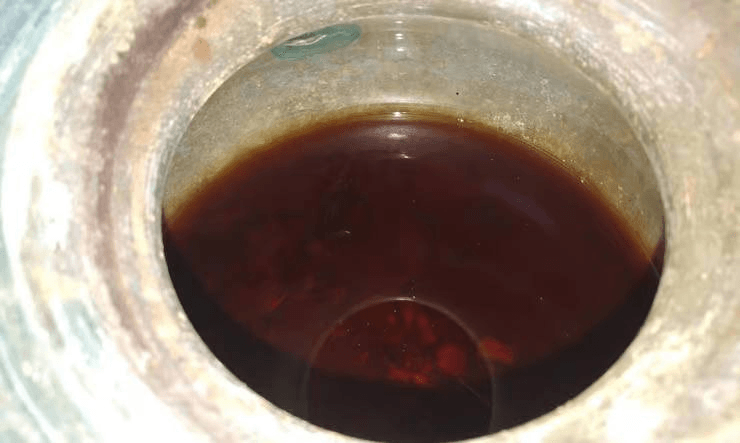
Oldest liquid wine found in Spain
In Carmona, Andalusia, Spain, a team of researchers from the University of Córdoba, led by Professor José Rafael Ruiz Arrebola, discovered a glass urn containing a reddish liquid, identified as the oldest liquid wine ever found, dating back about 2,000 years. This "breaks" the previous record, when liquid wine was discovered that was "only" 1,500…
-
Evolution of Smell and Taste in Mandrake Plants: Geographic and Genetic Influences
Mandrake is a genus of three species belonging to the Solanaceae family. The mandrake is known for its intoxicating scent and sweet taste, often reported in folklore as an aphrodisiac, and it also has a reputation as a hallucinogenic plant. Like many other plants in the Solanaceae family, it contains various alkaloids, making it a…
-
Berserkers and the Symbolic Power of War
Did the Viking berserker ritual involve drug use to achieve a battle frenzy? Maybe. But there's no evidence for it, so it's entirely speculative. The idea was first proposed by the Swedish theologian Samuel Ödmann in 1784, based on a thirteenth-century description by Snorri Sturluson, who described the wild behavior of warriors before battle and…
-
The Haoma plant identification
"The Farvahar, the soul of Zarathushtra, descended into the physical world in the form of the um. The haoma – In Middle Persian hum, and in Sanskrit soma – is a plant that was used for worship purposes in the ancient Indo-Iranian religion. Scholars differ in their opinions regarding its identification. The meaning is "squeezing",…
-
The psychedelic origin of the Tyrian purple?
A factory for producing Tyrian purple dye from the 16th century BCE was found on the island of Aegina, adjacent to mainland Greece. The Phoenicians were not at their peak during that time, and it is likely that the factory was not Phoenician but Minoan. It turns out that the original producers of Tyrian purple…
-
New Study Challenges Human Transport Theory of Stonehenge Bluestones with Glacial Evidence
A new study claims that the bluestones at Stonehenge were not transported to the site by humans but are instead the result of natural glacial movement. The research is based on an analysis of the Newall Boulder, a bluestone discovered at the Stonehenge site in 1924. Until now, the overwhelming majority of archaeologists believed that…