
תגית: Mythology
-
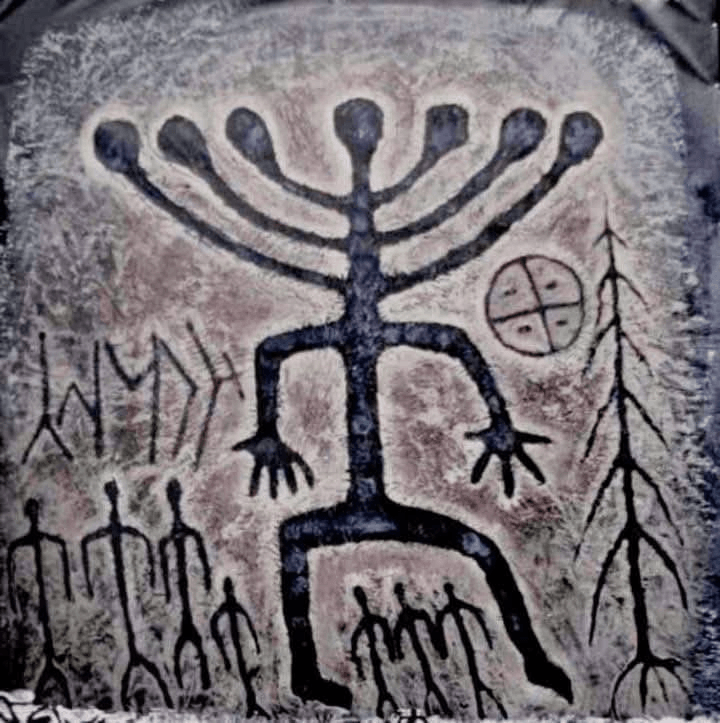
The Mystery of the Siberian Petroglyph: Symbolism, Myth, or Modern Fabrication?
I cannot find any references to this petroglyph, which was supposedly discovered years ago in Siberia. I am inclined to believe that if none of the databases recognize it, and the only places where it appears are Pinterest and Instagram, then it is likely fake. That being said, this object is meant to symbolize the…
-
Heavenly Horses: Myth, Reality, and the Symbolism of Power in Ancient China
Myth and reality intertwine in the story of the “Heavenly Horses”, creatures regarded as nearly supernatural beings in ancient Chinese culture. According to legends, these horses were extraordinarily fast, capable of covering a thousand li (approximately 400 miles) in a single day, and their movement was described as flying above the ground. Their bodies were marked…
-

The sacred bee
Bees have inspired mystery due to their unique way of life within the hive. They live in complete darkness, and much of their activity remains hidden from human eyes. Even today, with advanced technologies, our understanding of the inner workings of the hive is limited. This sense of mystery is heightened by the perception of…
-
Mythology and Malaria
Ancient cultures around the world intertwined mosquito-borne diseases, such as malaria, with mythology. People used gods, demons, and supernatural forces to explain the spread of these diseases. In the second chapter of his book, "The Mosquito," recently translated into Hebrew and originally published in English in 2019, Timothy C. Winegard provides several examples. Mesopotamian texts…
-
why should the Yggdrasil be identified with the yew and not with the ash tree, and the psychedelic and typographic connection!
The Yggdrasil tree is considered the norse "world tree," the axis mundi, or the central pillar of the universe, connecting and separating different realms of existence. Its roots extend to various regions, and its branches reach the heavens. It serves as a bridge between worlds, linking Asgard (the realm of the gods), Midgard (the realm…
-
Something about the solar eclipse
The Mayans believed that during a solar eclipse, a cosmic battle took place in the sky. At the center of this celestial conflict were two prominent celestial beings: the sun, represented by the sun god Kinich Ahau, and Venus, symbolized by the god of war Chak Ek known as "The Great Star". The sun god…
-
The historical Amazons of Azerbaijan
According to findings of women's graves with weapons from 4000 years ago in Azerbaijan, it seems that the myths about the Amazons are true. The skeletons were found signs indicating the use of archery and horse riding. The weapons and jewelry in the graves indicate their social status. In the villages in the area of…
-
Amots Dafni's "In search of traces of the mandrake myth"
Amots Dafni is Professor Emeritus of Botany at the University of Haifa. He does specialize in pollination, but in his last years before his retirement and even more so since his retirement, he delved into ethnobotany. As an expert on the pollination of mandrake, he became an authority on the ethnobotany of the plant. In…
-
anemone in the bible as Adonis cult and the anti-pork campaign
The anemone is mentioned in the Bible, when Isaiah calls it "Naaman" in chapter 17, "You have forgotten God your Savior; you have not remembered the Rock, your fortress. Therefore, though you set out the Naamanim and plant vines of strangers". In Arabic, the flower is also called "Shakayik al Nuaman" شقائق النُعمان, and this…
-
Mushroom santa hypothesis and dismissal
Once a year I have the opportunity to share the wonderful story of Santa Claus as a Siberian shaman high on Amanita Muscaria mushroom who once sat and watched his reindeer eat these mushrooms and then joy and dance and pee and then go smell and lick their own urine. He began to imitate them.…