
תגית: minoan culture
-
Who were the Philistines?
Since the era of the patriarchs is dated from the birth of Abraham and lasted about 200 years, and 400 years before the Exodus, it places this period in the 18th century BCE. Some scholars, however, date it as late as the 14th century BCE, which is still centuries earlier than the archaeological evidence pointing…
-
Rationalizing the Minotaur myth
According to Greek mythology, King Minos of Crete had a labyrinth at Knossos. He would place unlucky victims in the labyrinth to be killed by the Minotaur, a half-man, half-bull monster. Although this might seem entirely unrealistic, there is evidence that the origin of this myth may be connected to the historical Minoan civilization. First…
-
The psychedelic origin of the Tyrian purple?
A factory for producing Tyrian purple dye from the 16th century BCE was found on the island of Aegina, adjacent to mainland Greece. The Phoenicians were not at their peak during that time, and it is likely that the factory was not Phoenician but Minoan. It turns out that the original producers of Tyrian purple…
-
Ancient Minoan Circular Structure Discovered in Crete: A Unique Ritual Site
A 4,000-year-old maze-like circular structure was found on a hilltop in western Crete. It immediately brings to mind the famous labyrinth, but its exact nature is unclear, although it is evidently from the Minoan period. The structure was used for ritual purposes, as indicated by numerous animal bones suggesting community feasts involving food, wine, and…
-
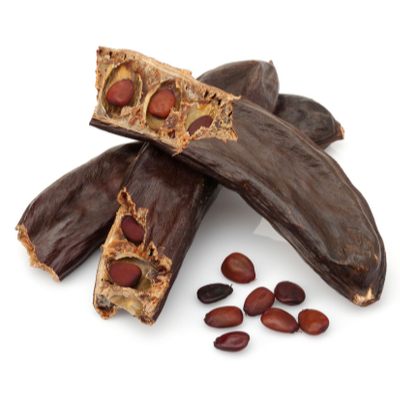
The carob as a symbol of destruction and redemption
The carob appears in quite a few Chazal (i.e jewish sages) legends in the context of destruction and redemption. I believe that the source of the adoration for the carob comes from the Hellenistic culture. Two legends are known: the first is about the Khoni Hame'agel (John the circle maker) falling asleep for 70 years,…