
-
The Significance of Twin Sacrifice in Maya Culture and the Myth of the Hero Twins
In Maya culture, the sacrifice of twins held special significance. Twins were perceived as having unique spiritual powers and symbolized important themes in Maya mythology and religion. They represented the concept of duality – the opposing and complementary forces existing in nature and the universe. They embodied the balance between good and evil, light and dark, life and death. Twins were seen as the manifestation of mythical twin heroes who sacrificed themselves for the benefit of humans, and thus, the sacrifice of twins was considered a reenactment of this myth and an attempt to influence the gods. In the myth of the hero twins, cycles of death and rebirth are described. The twins underwent processes of death and resurrection to overcome the gods of the underworld, symbolizing resurrection and the eternal cycle of life.
Evidence of this practice of sacrificing twins has now been discovered at a temple in Chichen Itza (the central Maya city in the Yucatan). Years ago, a burial site for children was discovered, and now, after genetic analysis, it has been revealed that the children appear to be twins, or at least close-aged siblings. The research shows that all 64 children examined were male, contradicting the assumption that there was a preference for female sacrifices. It was found that many of the children had very close genetic relationships, including two pairs of identical twins. The children had similar diets, indicating that they were raised in the same households. The burial site, discovered to be an underground cistern connected to a cave, suggests that the children were sacrificed to appease the Maya rain gods or to ensure successful maize harvests.
Appendix: The Maya Twin Myth
Hunahpu means "the warrior who shoots with a blowgun" in the Maya language. There were two twins, the first called "Hun Hunahpu," meaning "the first warrior," and the second called "Vucub Hunahpu," meaning "the seventh warrior." They were excellent warriors, as their names suggest, and also outstanding players of the ball game "Pok Ta Pok." The gods of the underworld (Xibalba), who did not like the idea of someone challenging them, wanted to prove that they were the best players and invited the twins to play. The twins lost, and as punishment for their audacity, they were executed.
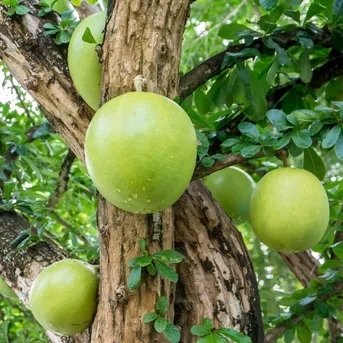
The head of Hun Hunahpu was decapitated and hung on a tree, and since then, the fruits of the tree on which it was hung became the hard balls of the calabash tree, known as jicaro, named after the cups made from the shells of its fruits, resembling a gourd. The juice of the fruit dripped from it, a strange thing because its seeds cannot be extracted without breaking the shell. Nonetheless, one of the seeds dripped directly into the hand of the daughter of one of the gods of the underworld, and she became pregnant. It is possible that she drank from a cup made from the fruit or drank horchata made from its seeds. In any case, she became pregnant and gave birth to twins, naming them Hunahpu and Xbalanque. Since they were considered illegitimate, she had to flee the underworld, and they continued to be pursued even outside of it.
However, they survived, grew up, and became excellent warriors and champions in the ball game. This again angered the gods of the underworld, so they invited them to a "battle." The game itself was very intense, and the gods struggled to defeat the brothers, reaching many times a tie-break situation that lasted for days. The gods tried to sabotage the game, cheat, deceive the brothers, and manipulate events, such as insisting on playing with a ball that turned out to be the skull of their father. One of the gods' tricks was to unleash deadly bats on the brothers. The brothers hid inside their blowguns, but Hunahpu peeked out and was injured. The gods took advantage of this, decapitated him, and demanded to play with the skull as a ball. The remaining brother used an "out" situation to swap the head with a gourd, reattached the head to his brother's body, and brought him back to life. The game continued until a hit to the gourd caused it to burst, leading to a narrow victory for the twins.
The gods were angry and plotted to murder the brothers. Eventually, they deceived them and burned them, scattering their ashes in the sea. However, a trick by the brothers caused their ashes to merge back, and they were reborn as catfish, which later turned into young boys. Returning to life in disguise, they performed miracles, including many tricks of burning and rising from the ashes. This impressed the gods of the underworld so much that they demanded to see the wonders. When the brothers performed in front of the gods of the underworld, they revealed their identities through trickery and killed the Xibalba. They ensured that the gods of the underworld would no longer receive offerings from humans. They retrieved the remains of their father and brought them back to the surface, but instead of staying there, they continued to ascend to the sky, becoming the sun and the moon.
-
Ancient Minoan Circular Structure Discovered in Crete: A Unique Ritual Site
A 4,000-year-old maze-like circular structure was found on a hilltop in western Crete. It immediately brings to mind the famous labyrinth, but its exact nature is unclear, although it is evidently from the Minoan period. The structure was used for ritual purposes, as indicated by numerous animal bones suggesting community feasts involving food, wine, and other offerings. The building consists of eight stone rings intersected by small walls forming various rooms, with a diameter of 157 feet. Inside, there is a central circle surrounded by radial walls. Minoan monuments are typically square, so this kind of architecture is previously unknown, except in tombs.
-
The Dragon Slayer Archetype
In the Aarne-Thompson Motif Index, motif number 300 is "The Dragon Slayer" which involves a hero who defeats a fearsome dragon and cuts off its head. Sometimes, the hero doesn’t kill the dragon but only neutralizes it. Since the dragon has magical powers that allow it to rise from its ashes or strengthen in other ways, it remains a threat and will one day return, needing to be defeated again. The one who will defeat it will be the same hero, a reincarnation, or one of his descendants. In the "Motif-Index of Folk-Literature", Stith Thompson expands on the character of the dragon, its hatching from an egg, being a hybrid with terrifying elements from various animals, having multiple heads (usually three), its appearance resembling a snake and perhaps even being a snake itself, and so on.
I am currently reading the new book by our group member Sarah Kugel, "Iranian Mythology", while also browsing Thamar Eilam Gindin's book "Heroes, Kings, and Dragons". Both books deal with Iranian mythology, and one of the central stories is about the evil king "Zahhak" who turned into a dragon or, alternatively, grew two man-eating snakes from his shoulders after being kissed by the devil. This king was wicked and represented Iran's enemy, and only after a thousand years did the national hero, Fereydun, manage to depose him. Fereydun is a later iteration of the original Avestan word Traitaunas, meaning "possessor of three powers". Zahhak is a later iteration of the Avestan word "Azi Dahaka," meaning "man resembling a dragon," and perhaps even "the laughing dragon". Perhaps he laughs because he is invincible, and even when defeated, he is not truly dead and always has more strength, at least until the final victory, which no one knows when it will come.
It's easy to see that this story is essentially a prototype of the "Whore of Babylon" in the Book of Revelation, who will only be defeated at the end of days. It's no coincidence that Babylon is mentioned since, in these Iranian stories, Zahhak is originally Babylonian or at least built a fortress in Babylon. Gindin mentions that in one version, he misled the Babylonians into believing in sacred scriptures he wrote called "Oritā" (from the Aramaic 'Oraiyta', the Torah) as if he were a reincarnation of Ahriman himself, posing as the good god, for Ahriman once tempted the first humans, infiltrated their thoughts, and made them worship demons. Such is also the Antichrist. The Gnostics (as well as the Manicheans who incorporated Zoroastrian elements into Gnosticism) claim that the God of the Jews is the god who created the material world, so it's clear why his sacred texts are referred to as the Jewish sacred texts. By the way, the Gnostics worshiped a being called Hermes Trismegistus, which means "the three times greater", or "the three times stronger". The fact that Megistus mentions the Zoroastrian Magus or Magi is very welcoming.
The deeds of Fereydun are based on another hero whose name is derived from the number three: Trita, an Indian hero (mentioned in the Vedas) who is also credited with killing a three-headed dragon named Trisiras. This story is an iteration of another story attributed to the god Indra, who killed a dragon named Vritra. Indra also fought with Varuna, the guardian of immortality, and took his place—a myth that reminds us of Yahweh's battle with Leviathan or Marduk's with Tiamat.
So much for comparative mythology. From here on, I will mention that Indra's favorite drink was soma, an intoxicating beverage he consumed before the battle with the dragon-serpent. This dragon was the leader of the "Asura", who were actually "Devas," gods who fell and became demons. They pretended to be benefactors, though they were power-hungry and deceitful. Three Devas—Varuna, Soma (Chandra), and Agni—who were initially on the dragon's side and called him "our father," were eventually bewitched and helped Indra defeat him.
The Indo-European warriors would drink soma to get the war frenzy, and Zarathustra did not like the uncontrolled way they consumed the sacred drink because it led to chaos and bloodshed. Alternatively, the priests of the false gods consumed haoma (which is the same as soma, just in Avestan) and through it worshipped demons, something Zarathustra despised. He called those demons daêva, and their worshippers "daêvan." Indra himself was called daêva. Zarathustra detested the haoma cult, and one of his reforms was to replace the intoxicating substance with ephedra, whose psychoactive effect is much lower. Some say he did not prohibit the use of the intoxicating drink but merely restricted its consumption because irresponsible people would have a "bad trip" or simply lose their inhibitions because of it.
At this point, I will mention, as Lewis Ungit already pointed out, that the dragon-serpent symbol they fight is essentially a personification of the psychedelic experience. Some people drink the intoxicating drink and get lost with it, fighting and being defeated by the dragon. Conversely, some people defeat it and cut off its head, but this does not make them immune later because the severed head will grow back, and the dragon will always be strong enough to attack the next time. Only at the end of days will that dragon, who disguises himself as a beautiful woman, truly die, and the one who defeats him will win the grand prize, perhaps even marry the princess—more and more elements recurring in Stith Thompson's index, which are probably now better understood.
-
The color of the tefillin wasn't an issue
The Talmud states that tefillin must be square and black, and this commandment is considered a law given to Moses at Sinai (i.e no reason but still a law). However, new research (published today at PLOS One) proves that the tefillin found at Qumran were not dyed at all, and certainly not black. Although some of them were found to be black in color, this blackness was not the result of intentional dyeing but rather the opposite—natural weathering and decay of the leather, likely due to moisture that seeped into the caves. That is, chemical examination of the tefillin eliminates the possibility that they were originally dyed black. Dyeing can be identified in one of two ways: using carbon-like materials such as charcoal or using tannin and iron oxides. Neither of these was found on the tefillin. Professor Yonatan Adler concludes from this that the color of the tefillin was not originally significant in Jewish law, and it is likely that the tradition of black tefillin developed at a later period.
-
Seahenge as a fertility rite
Seahenge is a prehistoric monument originally built around 2049 BC during the Early Bronze Age in Britain. It is located at Holme-next-the-Sea in Norfolk, England. The monument consists of a circle of oak trunks surrounding an inverted tree stump. The timbers were originally located on a salt marsh, but due to coastal erosion, they were excavated in 1999 and are now on display at the Lynn Museum in King's Lynn, Norfolk. A replica of Seahenge has been erected near the original site.
The purpose of Seahenge has long been a mystery. Until recently, it was thought that the monument may have been a memorial site or a place for sky burials. However, a new theory has been proposed by archaeologist David Nance of the University of Aberdeen. Nance believes that Seahenge was built as part of a ritual to bring an end to a period of extreme cold and to hasten the arrival of summer.
Nance's theory is based on several observations. First, he notes that Seahenge is aligned with the summer solstice sunrise. Second, he points out that the monument is shaped like a cuckoo's nest. The cuckoo was a symbol of fertility for the ancient people of Britain, and they may have believed that its song could bring warm weather.
Actually there are two Seahenge monuments, not just one. The first, which he calls "Holme 1," is the cuckoo's nest. The second, "Holme 2," is a Venus-like fertility goddess shrine where sacrifices were made to appease the goddess and restore cosmic harmony.
-
The origins of Tel Arad's temple
In the ostracon found at Tel Arad, a significant number of names include the element "Yahu," which may indicate the worship of Yahweh by the Judeans or possibly Kenite origins. Benjamin Mazar proposed that the foundation story of Arad in Judges 1:16 suggests that the temple dedicated to Yahu was built by the Kenites. This theory is linked to the narrative of Moses' family (related to the Kenites) serving at another frontier temple in the city of Dan. Both Arad and Dan were frontier temples symbolizing the kingdom's authority within its borders, located in major fortresses serving as security and administrative centers.
According to 2 Chronicles 12, Shishak, the king of Egypt, conquered the fortresses of Judah, including two named Arad—one called the great Arad and the other Arad of Yeroham. Yohanan Aharoni hypothesized that Arad of Yeroham was the ancient Canaanite city, while the great Arad was a new city established by King Solomon, likely around an existing Kenite temple. This could explain references in 1 Samuel to the "Negev of the Kenite" and the "Negev of Yerahmeel," or "cities of the Kenites" and "cities of Yerahmeel." The name Yerahmeel is the theophorical form of Yeroham.
The term "Negev" in Hebrew means "south," but it also has a significant meaning derived from the Arabic root NQB, meaning a mountain pass. Fortresses were typically built in mountain passes to dominate the area and collect protection money or taxes. These fortresses reflected the territorial ambitions of the Kingdom of Judah. The southern slopes of Mount Hebron are divided into different directions: west (Philistines/Pelethites), southwest (Hezron/Cherethites), south (Yerahmeel), and southeast (Kenites). Both Yerahmeel and Caleb are considered descendants of Hezron (son of Perez). Scholars argue that Yerahmeelites, Calebites (Kenizzites), and Kenites were desert nomads who were either artificially or politically integrated into Judah. The name Kenaz also appears among the Edomites, and Yerahmeelite names are found among the Horites.
This context helps explain why non-Judaic names like Pashhur, Keros, and Meremoth (which contains the theophorical element of the god Moth) appear among the priests' names found on Tel Arad's ostraca. These names are also found among the priests who returned from the Babylonian exile and helped build the Second Temple, with a surprising descendant listed in 1 Chronicles 9: Yeroham, son of Pashhur, son of Malkiah. The names Pashhur and Malkiah also appear on Tel Arad's ostraca. This suggests that the priests or families of the priests from Arad might have been relocated to Jerusalem when the temple in Arad was no longer in use.
-
The Two Tales of Horse Domestication
A new study in "Nature" suggests that horses were domesticated twice. The first attempt failed, and only the second attempt, 1000 years later (around 2200 BCE), succeeded. More precisely, there were two lineages of domesticated horses, but only the later lineage, the one that exists today, dominated the world. The "original" lineage, called Botai horses (named after the Botai culture that tried to domesticate them), failed to become fully domesticated and reverted to being wild. Over the years, they evolved into the Przewalski's horse, a breed of wild horse. The first domestication was for the purpose of using horses for milk and meat, while the second was for using horses as a working force and means of transportation. The implication: the Yamnaya culture, ancestors of the Indo-Europeans, who migrated westward, did not do so using horses and wagons as previously thought.
-
Mexican Indigenous Group Fights to Preserve Sacred Sites
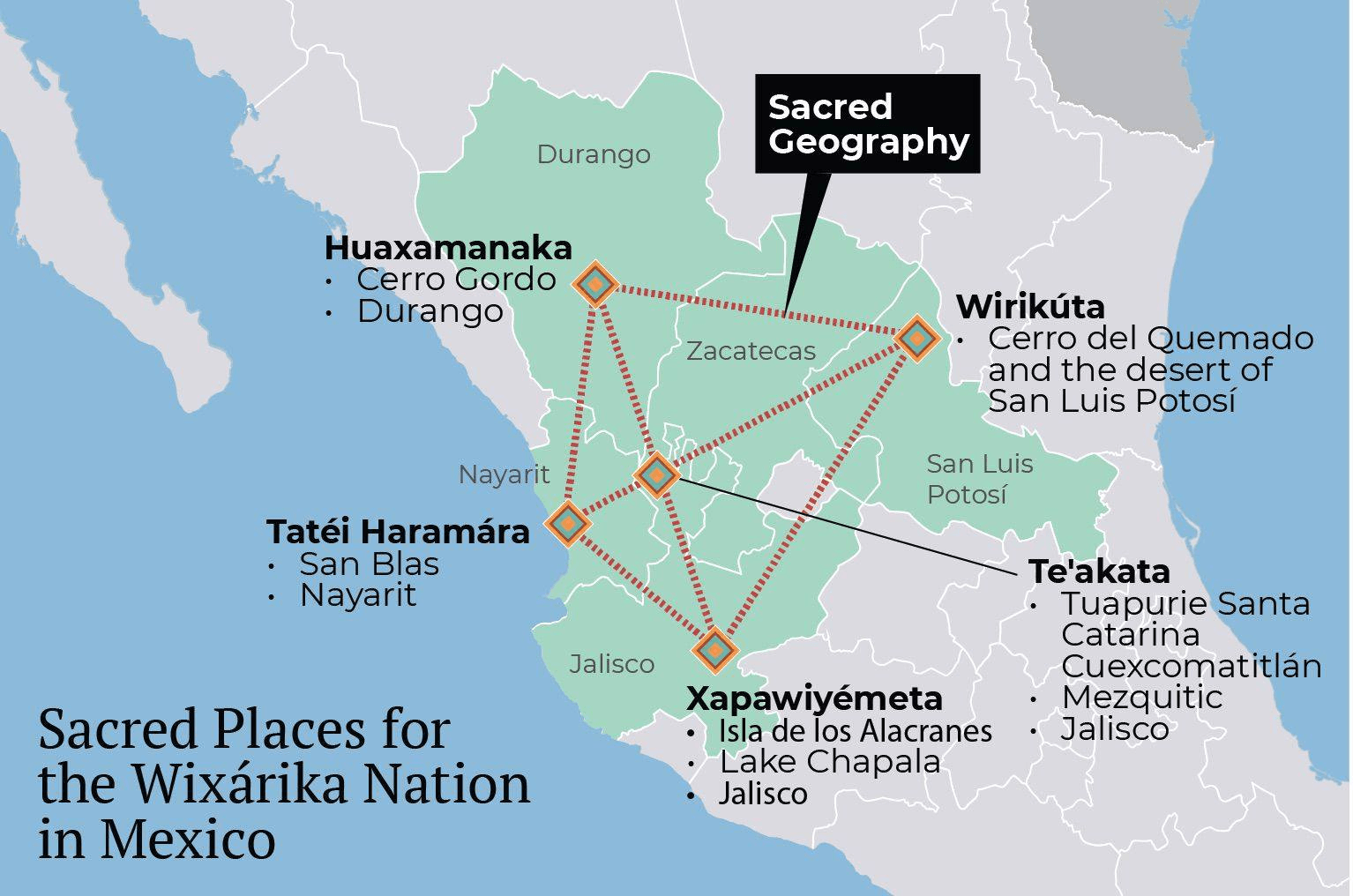
The Huichol, or as they call themselves "Wixárika", are a native people who live in the western Sierra Madre mountains. They are known for the "Peyote Hunt" ceremony they hold every year, a journey spanning hundreds of kilometers through the desert to a place called Wirikuta, passing through various sacred sites along the way. For the Wixárika, nature itself is sacred. Hills, caves, springs, rivers, rocks, and mountains serve as their temples. These natural sites are part of a sacred geography linked to their origin story. According to their origin story, the gods came from the Pacific Ocean, Tatéi Haramara, and during their journey, they transformed into mountains, bodies of water, wind, fire – everything that enables life on the planet – and created the world. The places where they stopped became natural sanctuaries. Analyzing the locations of these places reveals that they form a kind of structure resembling what they see and call the "Eye of God".
A bit about Mexico's geography to clarify: in the Americas, there is a chain of mountains (cordillera) that stretches the entire length of the continent, or more accurately, all three of its parts, along the Pacific Ocean. In Mexico specifically, this chain of mountains splits into several branches, all together called the "Sierra Madre". There's an eastern chain of mountains and a western one, and between them, there's a semi-desert zone, meaning areas with sparse vegetation, which are ideal habitats for cacti, including the peyote.
Their relative isolation in the mountains in inaccessible areas has allowed them to preserve their religious traditions and relatively secure their language, as well as maintain autonomy both against Spanish colonizers and modern Mexico. But since mining activities have been discovered at the center of Mexico, it has become a central hub for mining, and for the natives who consider these places holy, a difficult problem has arisen because they are their religious properties.
From the Wixárika perspective, it's about many square kilometers, including blocked access roads, areas that have been confiscated or sold to private individuals, and of course the mining industry, which not only affects their traditions and emotions but also the quality of the environment.
Although the UN Declaration on the Rights of Indigenous Peoples entered into force in Mexico in 1991, the spirits of the natives still exist, as they do not really see how the country respects and preserves what they see as their lands, and the way they use them to preserve their culture. In response to their protest, a committee was formed to preserve their five main holy sites that make up their sacred geography, and several other indigenous peoples who share these territories also joined the proposal.
In the end, on August 9th, the president of Mexico signed a decree regulating 384 hectares as sacred sites, where no state actions that would harm them will take place. But the Wixárika still fear that the fact that many other places that actually maintain their tradition and were not included in the decree will ultimately lead to the death of their tradition. They also fear that the Mexican government will not respect the decree that imposes protections on their holy sites or will not be committed to it in the future.
One problematic place, for example, is that same island Tatéi Haramara, located off the coast of San Blas in the state of Nayarit. The place was sold to foreign businessmen. In January, the Mexican Ministry of Environment traveled to Tatéi Haramara to measure the sought-after area in a very partial decree (only 30% of the island's area), and the weight of the decree has not yet been felt despite the decree, and the natives are worried. (source)
-
The Flora of Qumran: The Blasam tree in the Thanksgiving Scroll
The following post has no point other than to describe the flora of Qumran as reflected in the Thanksgiving Scroll, beautifully illustrating the concept of hidden knowledge as a spring of living waters, and why those who drink from this spring are ultimately expected to survive Judgment Day.
The texts, according to Elisha Qimron, "Hebrew Writings from Qumran A, p. 82, reconstructed from Column XVI lQHb fragments 1 and 2, 4QHb fragment 10, and 4QHf fragment 13," lines 5-29.
In the Thanksgiving Scroll from Qumran, the sect members compare themselves to the Tree of Life in the Garden of Eden and their opponents to "water trees". These Trees of Life are hidden among the multitude of water trees and draw their waters from the river flowing from Eden, "Yuval", compared to the other trees that draw their waters from the "underworld". While the water trees draw from sewage, the Trees of Life draw from "holy waters" and a "spring of life", protected by "holy spirits and a flaming sword". The advantage of these Trees of Life is that their roots can penetrate the rock, making them stronger than the other trees. They are also more resistant to flash floods, survive in hot environments, and most importantly, thrive in the harsh, salty soil of the Judean Desert.
Most of the Judean Desert is covered with soft chalk rocks, which are relatively impermeable, so water does not infiltrate but rather becomes runoff during heavy rain, flowing down the mountains and gathering in channels to form flash floods. Specifically, in the Dead Sea area, streams flow from East Jerusalem, and the city's sewage is discharged outside the city. During rains, the chalk runoff mixes with the sewage, creating brown mud streams that carry all the dirt down. This is well described in Isaiah 57:20, "But the wicked are like the troubled sea, when it cannot rest, whose waters cast up mire and dirt", and also in the Thanksgiving Scroll, "In the rushing streams of rivers, for they cast their dirt upon me".
Since the desert is covered with chalk and water does not infiltrate, most of the soil above it has been washed away, leaving a very thin layer that barely covers the underlying rock. This soil, already soaked with sewage, is salty and thus unsuitable for most plants, except those with roots close to the surface or those adapted to high salinity.
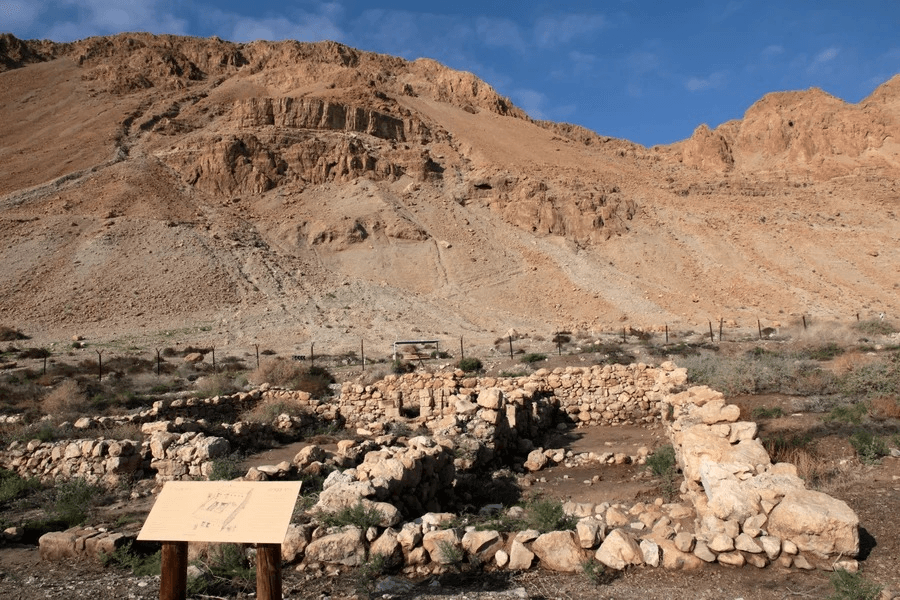
However, since the chalk ground is very friable, it can be easily dug. The desert inhabitants exploited this and built water reservoirs, small pits capable of efficiently collecting runoff water. These reservoirs store water channeled into them via small artificial channels, and since the water does not infiltrate, they serve as accessible water reservoirs. But these reservoirs must be hidden because if not, the floods will destroy them. In the Qumran Valley, there are several such reservoirs, the most famous being called "Bir Abu Sha'ala". Some claim the place is connected to the prophet Elijah. "Sha'ala" means flame; Elijah ascended to heaven in a whirlwind of fire.
The Qumran Valley descends from "Mount Azazel", the place where the scapegoat was sent to Azazel on Yom Kippur. This can be compared to casting sins into the depths of the sea, as described in the Book of Micah. Once the waste is thrown from the mountain top, it will eventually be washed to the bottom of the mountain during flash floods, already mixed with sewage. Whether or not related, the area where the Qumran caves are located, between Wadi Og and Wadi Kidron, is characterized by streams originating from the same place described in the Book of Zechariah, where the Mount of Olives will split in half eastward and westward (Zechariah 14:4), symbolizing the waters flowing from Jerusalem, especially from the "Foundation Stone" (i.e the dome of the rock. this rock).
Indeed, as mentioned, the Qumran sect describes themselves as trees drawing from the Yuval. It is stated in Midrash Rabbah (Leviticus Rabbah 22:10, and also Numbers Rabbah 21:18): "Rabbi Shimon bar Yochai taught, 'A river goes out of Eden', called Yuval, and from there it drinks. And why? 'It shall send its roots by the Yuval' (Jeremiah 17:8)". A well-known river goes out from the Garden of Eden and is said to split into four heads. Considering the Foundation Stone as the place from which the world was created, Jerusalem is the Garden of Eden, from which many rivers flow, including all the streams surrounding Qumran: Wadi Og, Wadi Qumran, Wadi Kidron, Wadi Darga, etc. And where do all these flow? To the region where the balsam tree grows, known collectively as "Ein Gedi," considered an oasis. However, it is possible that the oasis described in the Thanksgiving Scroll, "And a holy fruit orchard will be an eternal source to Eden with glory and fruit of splendor, and by its side will open their source with all their streams flowing on a straight path," is actually Enot Tsukim, located in the same Qumran area. It is likely that those trees of life that are described as living on the streams of water, are nothing but the persimmon/balsam trees, the Commiphora.
BTW: "Nahal Secacah," the place where "Bir Abu Sha'ala" is located, is one of the central places where John Marco Allegro searched for the treasure that he claimed is mentioned in the Copper Scroll. The scroll states, "A tomb in Nahal Kepha as you come from Jericho to Secacah, concealed seven cubits deep," and also "In the ruin that is in the Valley of Achor, under the steps going east, forty cubits of silver coins." The Valley of Achor is supposedly Hyrcania, near Nahal Secacah.
-
Mythology and Malaria
Ancient cultures around the world intertwined mosquito-borne diseases, such as malaria, with mythology. People used gods, demons, and supernatural forces to explain the spread of these diseases. In the second chapter of his book, "The Mosquito," recently translated into Hebrew and originally published in English in 2019, Timothy C. Winegard provides several examples.
Mesopotamian texts attribute malaria to Nergal, the god of the underworld, depicted as a mosquito. The Canaanites and Philistines worshipped Baal-Zebub, and the fact that Christians later associated this name with the devil suggests that he was a god worshipped to prevent diseases. This conclusion is based on the idea that in Zoroastrian and Babylonian beliefs, the evil spirits that brought diseases were represented as mosquitoes. In Chinese folklore, malaria is described as a demonic trio, with each demon representing a stage in the fever cycle: one wielding a bucket of ice water for chills, another stoking a blazing fire for fever, and the third armed with a hammer for sweating and headaches. These demons were believed to disrupt the balance between yin and yang and harm the chi, according to Chinese beliefs. Indian physicians referred to malaria as the "queen of diseases" and associated it with the fiery fever demon Takman, who was born from lightning.
The Bible frequently depicts divine judgment in the form of plagues of insects and the deadly diseases they spread. The Bible also describes several diseases given as punishment, and while it is not clear what they were, scholars suggest that the disease that decimated Sennacherib's army during the siege of Jerusalem might have been malaria, although some argue it was bubonic plague. The reason to believe it was malaria is based on archaeological findings that mosquito-borne diseases, such as malaria, were prevalent, and perhaps the most common, in Egypt and across the Middle East during those years. Herodotus reports that the Egyptians fought against mosquitoes and invented various methods to combat them, such as nets and towers to keep them away from low-flying mosquitoes. He also notes that to cure themselves of malaria, the Egyptians would bathe in fresh urine.
Malaria was so widespread in Egypt that even kings suffered from it, such as Tutankhamun. Reliefs in Thebes and Luxor show that filariasis severely affected Egypt in the second millennium BCE and might have been the "plagues" mentioned in the Book of Genesis that God sent upon Pharaoh. Could the "hornet" that God sent against the Canaanites before the Israelites' entry into the Promised Land have actually been the mosquito?