
קטגוריה: english posts
-
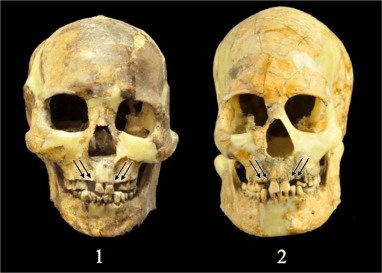
Ancient Aesthetic: The 4,800-Year Tradition of Tooth Extraction in Taiwan's Austronesian Culture
A very unique body modification practice in Taiwan, among the ancient population, involved the deliberate extraction of healthy front teeth for aesthetic reasons, as it was considered beautiful, or as a sign of bravery, or because removing them now would prevent them from decaying later. This practice has existed for at least 4,800 years and…
-
Washing with sacred cow urine
Gomez is a term in Middle Persian that refers to the urine of a cow, bull, or sheep, which was used in religious and purification rituals in Zoroastrian ceremonies. Gomez was considered a powerful purifying agent in Zoroastrianism and played an important role in rituals meant to cleanse people, clothes, or objects from impurities, especially…
-
Water cult in the Andes
Archaeologists have uncovered the skeletal remains of four people (two children, a teenager, and an adult) who were buried in the Viru Valley of Peru about 3,800 years ago, millennia before the Incas flourished in the region. The skeletons were positioned lying on their sides and appear to be facing a mountain. Remains of funerary…
-
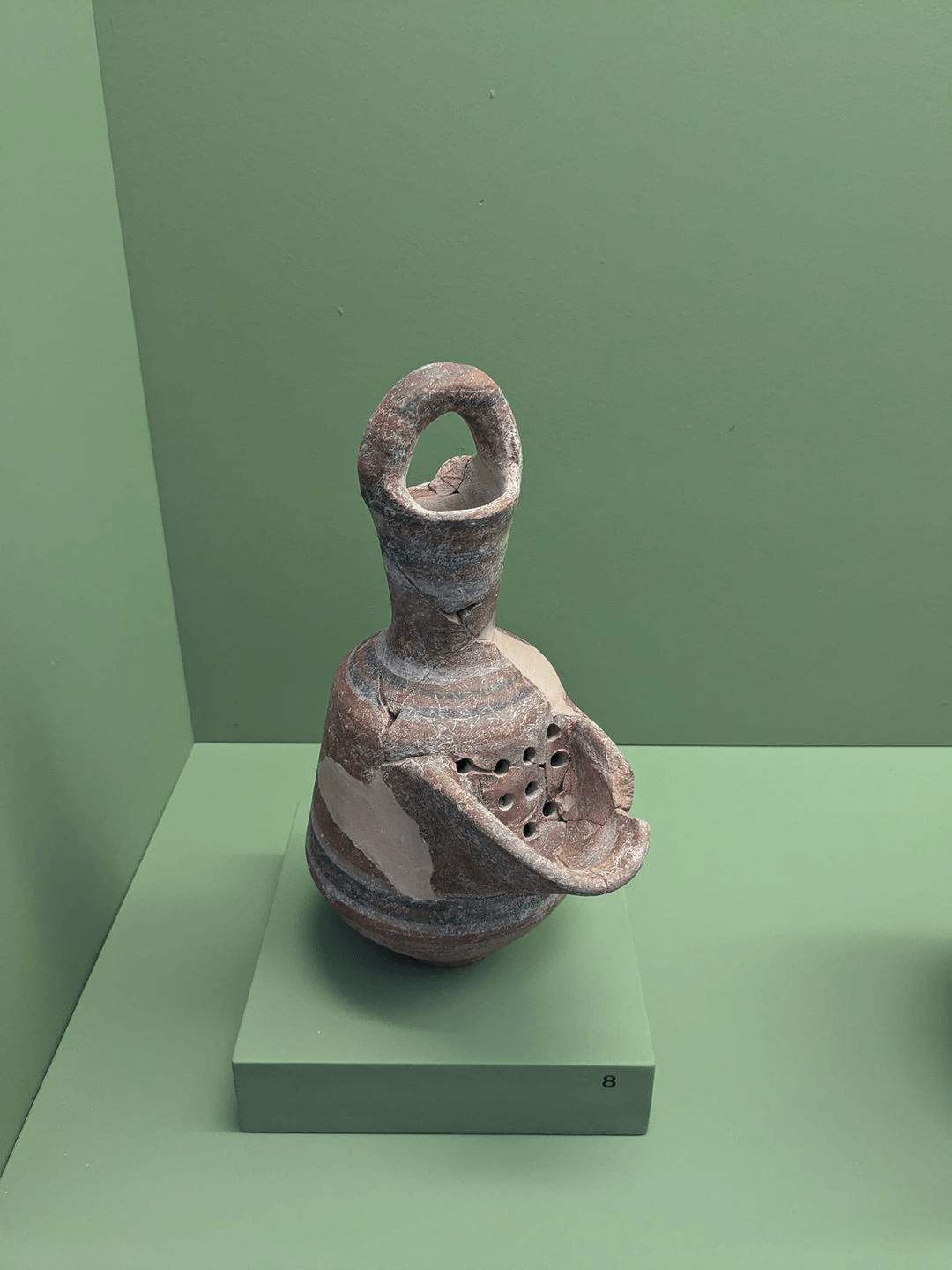
A Philistine beer jug
A Philistine beer jug, Khirbet Qeiyafa. The Iron age 2a, 10th century BC. On display at the Museum of the Biblical Lands, Jerusalem, from the collection of the Israel Antiquities Authority. Most of the vessels found in Khirbet Qeiyafa maintain the Canaanite tradition. The very small number of Philistine-type vessels recovered from the city which…
-
Caves as Doors of Perception #2
Once again, Professor Ran Barkai presents, this time with a more concise and comprehensive lecture, where he expands slightly on the logic behind his theory: According to the worldview of indigenous cultures, caves were considered liminal spaces, gateways to the underworld, from which abundance flows. In these cultures, shamans could enter altered states of consciousness…
-
Caves as Doors of Perception
Professor Ran Barkai from Tel Aviv University researches the connection between humans and caves in terms of altered states of consciousness. Barkai argues that in the distant past, caves served as "transformative arenas" where humans experienced unique states of consciousness, caused by oxygen deprivation due to the use of artificial light deep within the caves.…
-
A Scottish provenance for the Altar Stone of Stonehenge
A new study suggests that the Altar Stone at Stonehenge contains a rock formation found in northern Scotland (called the "Orcadian Basin"), rather than in Wales as previously believed. This means that instead of a 220 km journey, it traveled over 750 km to reach its location. While some of the bluestones did indeed come…
-
Trance, posture, and tobacco in the Casas Grandes shamanic tradition
In the Paquimé culture of Casas Grandes in Chihuahua, Mexico, tobacco was smoked in a posture known as the "Tennessee Diviner" (TD posture), to achieve altered states of consciousness depicted in the unique iconography found at the site. This posture is not unique to the Casas Grandes culture but is part of a broader ritual…