
חודש: פברואר 2024
-
Mongolian nomads sustain the millenia-old way of life and traditions
GlobalVoices: About 30% of the population in Mongolia are nomads or semi-nomads. Mongolian culture, characterized by the cultivation of horses and nomadic life, has been preserved even among modern society and is applied in a unique way. According to local belief, it is forbidden to dig the earth and whoever digs is expected to be…
-
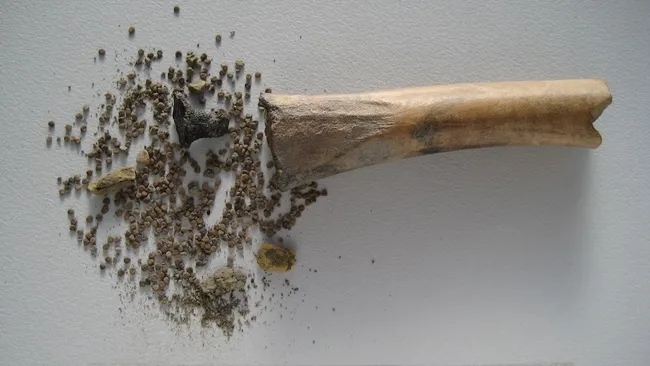
Evidence of the intentional use of henbane in the Roman Netherlands
Archaeologists have discovered the first conclusive evidence that the henbane was used in the Roman world (Hyoscyamus niger). Before this discovery in 2017, there was no physical evidence of this plant being used by people in the Roman Empire. Hundreds of the plant's seeds were found in a 7 cm long hollow bone of a…
-

were the levites escort boys?
Israel Knohl claims in his book "Hashem" (2012) that the meaning of the verse "When you ascended on high, you took many captives; you received gifts from people, even from the disobedients — that you, Lord God, might dwell there" in Psalms 68:19, is that there was a war in Hermon between the Israelites and…
-
Jesus opposed the temple sex traffic
Was the cleansing of the Temple of Christ actually a protest against sex traffic of minors? Is that why he talked so much about the children's innocence? Was his claims of desecration of the temple for being a "a house of trade" because the anointing oil symbols were used to drug these minors? Were the…
-
New anthology on 'magical' texts published
About 100 years ago, the papyriologist Karl Prisendanz published a collection of "Greek" spells and magic texts, Papyri Graecae Magicae, which, despite the name, were mostly Egyptian in the Greek language. Later, the study also published a collection of texts in the Demotic writing Papyri Demoticae Magicae. Now, a team of researchers from the University…
-
Tripping on Utopia: Margaret Mead, the Cold War, and the Troubled Birth of Psychedelic Science
The still untold chapter in the history of psychedelics (at least not in Ido Hartogsohn's or Michael Pollan's books) is the involvement of the anthropologist Margaret Mead, perhaps the most senior scientist of the period of the 1940s and 1950s who dealt with the matter. Mead already had an elite status among consciousness researchers, in…
-
indigenous Tamil Nadu sacred forests
AP: Many sacred forests have restrictions that allow activity and access only to members of specific communities. Hunting, gathering, picking, cutting and other activities may be strictly prohibited in these spaces. In many sacred forests, even breaking a branch or plucking a leaf or flower is not acceptable. For example, in the Banagudi Shola forest…
-
tuberculosis in late Neanderthal skeletons
It is common to understand that Neanderthal man disappeared at the same time as Homo-sapiens appeared, and that there is probably a connection between the two. It is commonly thought that this was due to the takeover by the migrating modern man of the living area of the local Neanderthals, and perhaps even active extermination…
-
Osun-Osogbo festival origins
Osun-Osogbo is a grove located on the banks of the Osun River, which is considered to be the river sacred to the Yoruba goddess of fertility, Osun. On the shores of Osun, a kingdom called Osogbo was established by refugees who arrived in following a great famine that hit the area. The leader of these…
-
An Early Neolithic Dolmen with Early Megalithic Tombs on Sweden
A dolmen from 5000 years ago is found in Sweden and is considered the oldest found in Scandinavia. What indicates its antiquity is the fact that it differs from the form of burial common in the Neolithic era in the same area, the so-called "passage grave". In the dolmen, 12 human remains were found, all…